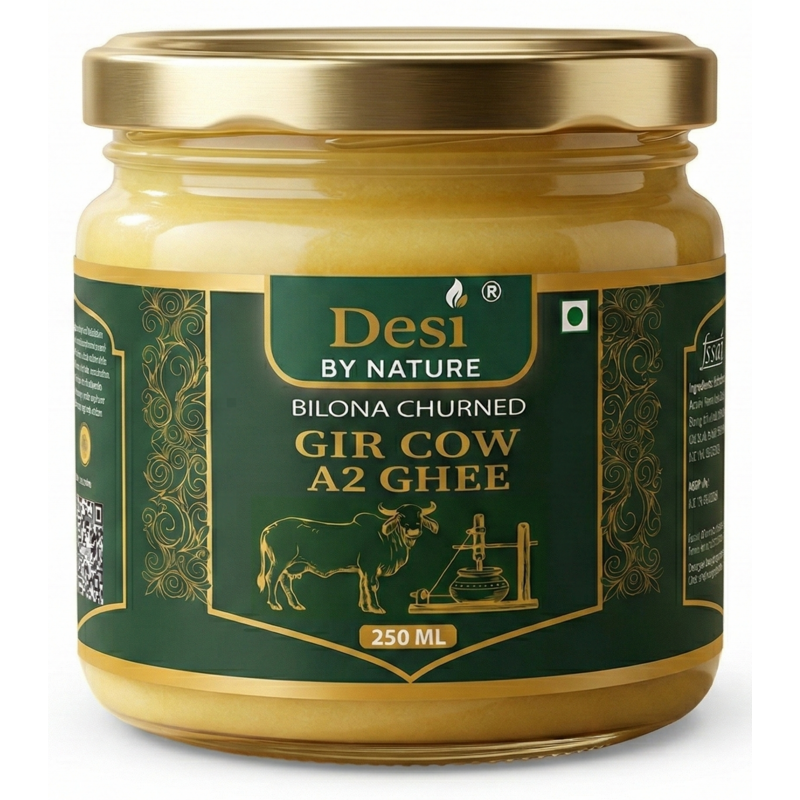
If a ghee brand shows you a lab report, it will be a list of parameters and numbers with no explanation. Here is what each of the main ones means, so the report is useful to you rather than decorative.
These derive from the Food Safety and Standards Regulations, under which ghee is defined as the pure clarified fat obtained solely from milk, curd or cream, with no added colouring matter or preservative.
Moisture: not more than 0.5%
Ghee is meant to be fat with the water driven off. The legal cap on moisture is 0.5%.
This is a more important number than it looks. Water is what allows microbial growth, so moisture within limits is the main reason ghee is shelf-stable at room temperature for months without preservatives. It is also why the practical consequence of the 0.5% cap is that everything else in the jar is essentially milk fat.
Free fatty acids: not more than 3.0%
Expressed as oleic acid. Free fatty acids are released as fat breaks down, so this number is a measure of freshness and of how well the ghee was made and stored.
A rising FFA figure means the fat is degrading. Old stock, poor storage, or overheating during production all push it up. Well-made fresh ghee generally sits comfortably below the legal ceiling, so a result close to 3.0% is technically compliant but not impressive.
Baudouin test: negative
The test for vanaspati adulteration. A negative result is required for a product to be legally sold as ghee.
It works by detecting sesame oil, which Indian law requires to be present in vanaspati specifically so this test can catch it. There is a longer explanation here, including why it is not a test to attempt at home.
Butyro-refractometer (BR) reading at 40°C
An optical measurement of how the fat refracts light, which correlates with its fatty acid composition. For ghee the specified range is roughly 40.0 to 43.0.
Most vegetable oils fall well outside that range, so a BR reading outside the window is a strong indicator that something other than milk fat is present. It is a broad screen rather than a specific one: it flags that the fat profile is wrong without identifying what was added.
Reichert Meissl value
A measure of the volatile, water-soluble fatty acids, particularly butyric acid. Milk fat is unusually rich in these; vegetable oils contain almost none.
This makes the RM value one of the more informative single numbers on a ghee report. A low RM value suggests dilution with vegetable fat.
One honest caveat: the legal minimum is not a single figure nationwide. It varies by region and by season, because the fatty acid profile of milk changes with what the cattle are eating. The commonly applied minimum is 28, with lower limits permitted in certain southern states and during particular months. If you are comparing a report against a standard, check which limit applies.
What a report does not cover
These parameters establish that a product is genuine, unadulterated milk fat that meets the legal definition of ghee. That is a real assurance, and it is worth having.
They do not establish:
- Whether the milk was A2 or A1
- Whether the ghee was churned from curd or separated from cream
- Whether the cattle grazed or were stall-fed
- Anything about flavour or aroma
Those are sourcing questions, and no standard chemical panel answers them. A brand that answers "is it pure?" with a lab report and answers "where is it from?" with adjectives has told you one thing and not the other.
The one number you can check yourself, today
The FSSAI licence number on the label. It is 14 digits, and it is searchable on the FSSAI's public register, which will show you the licence holder and its status. It costs you thirty seconds and it is the only claim on most ghee packaging that you can independently verify without a laboratory.
A brand that prints an FSSAI logo but no number has given you a graphic, not a licence.
Ours is 11525079000402. Every batch of our A2 Gir cow ghee is tested before sale; send us your batch code on WhatsApp and we will share the results for it. See the ghee.