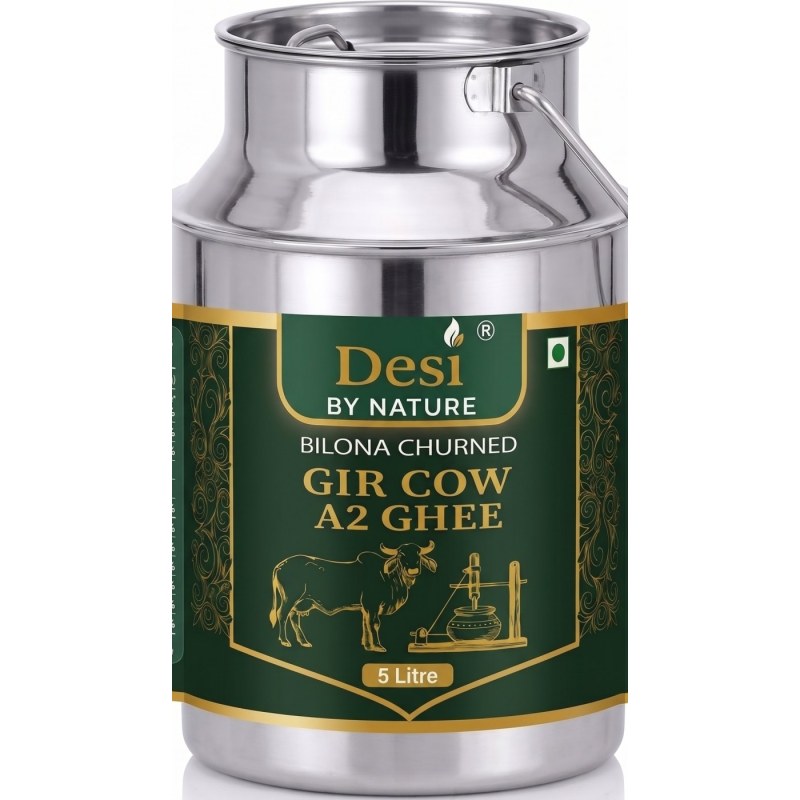
How Much Milk Goes Into One Litre of Bilona Ghee?
The short answer is usually 25 to 30 litres. The longer answer depends on the cow, the season, the method and the maker. Here is what moves the number, with the working shown.
Read article →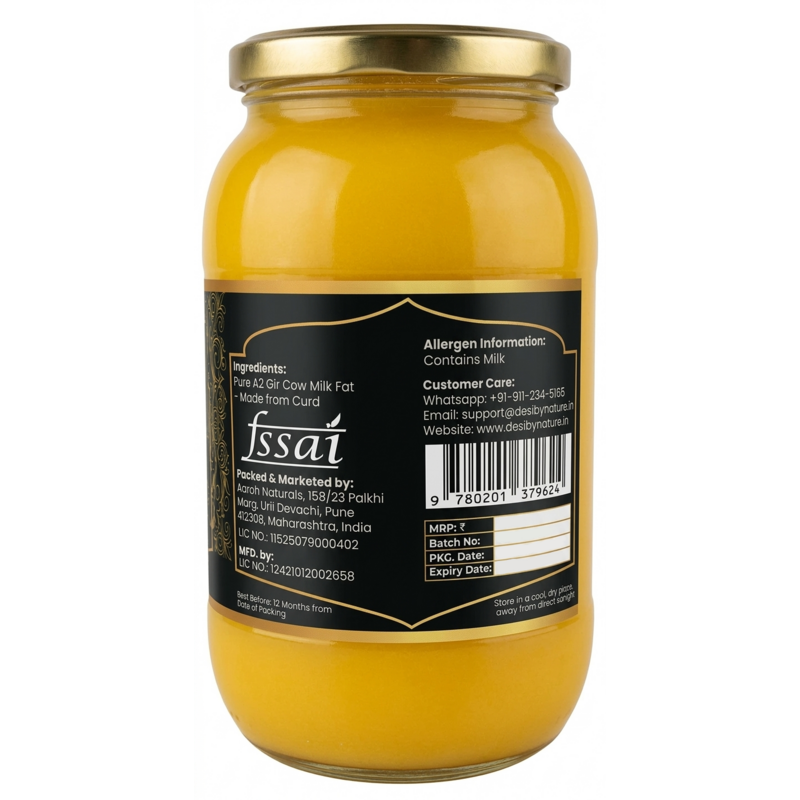
Jeera Rice in Ghee, the Way Restaurants Make It
Restaurant jeera rice is fluffy, separate and fragrant with toasted cumin. At home it often turns out soft and bland. The fix is a proper soak, the right water and letting the cumin go a shade darker than feels comfortable.
Read article →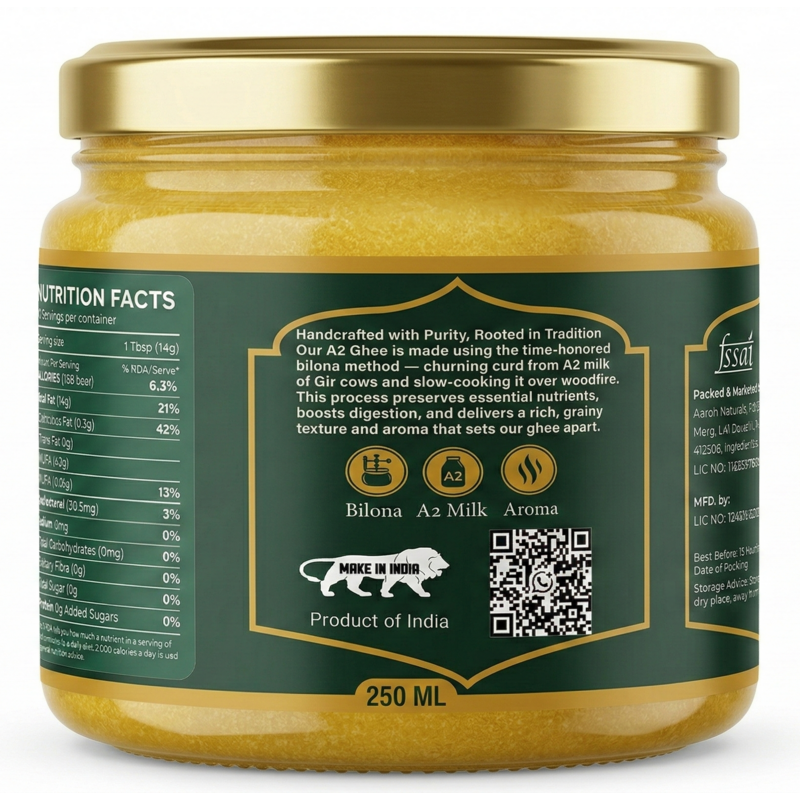
What We Look For Before We Sell a Dairy's Ghee
We do not make ghee. We find dairies that make it well, and most of the ones we visit do not make the cut. These are the things we check, from the animals and the curd to the smell of the kitchen.
Read article →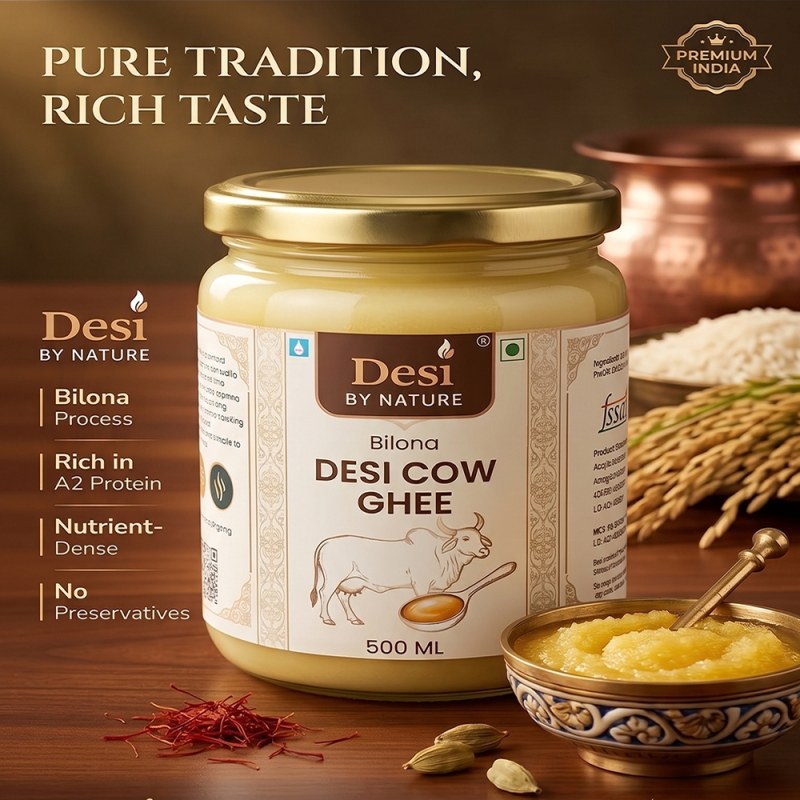
Aloo Paratha with Ghee: Crisp Outside, Soft Inside
A Punjabi aloo paratha should be thin enough to show a hint of the filling, crisp at the edges and soft in the middle. The filling needs to be dry, the dough soft, and the ghee added at the right moment.
Read article →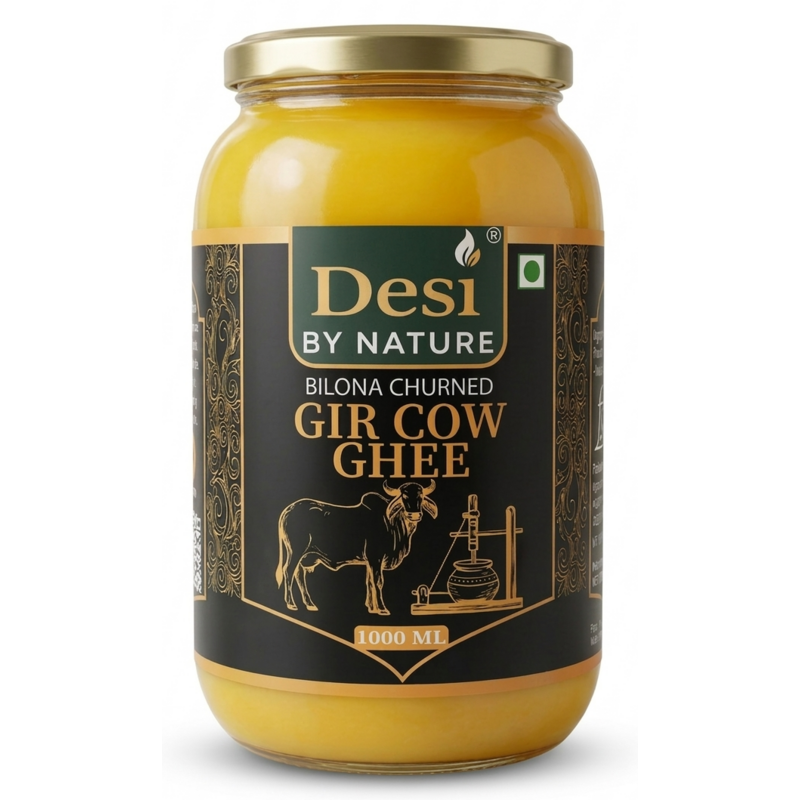
Why Real Bilona Ghee Costs ₹1,500 a Litre or More
A litre of bilona ghee can cost two or three times as much as a familiar supermarket brand. The gap is not branding. It is milk, fat recovery, time and packaging, and the arithmetic is easier to follow than you might expect.
Read article →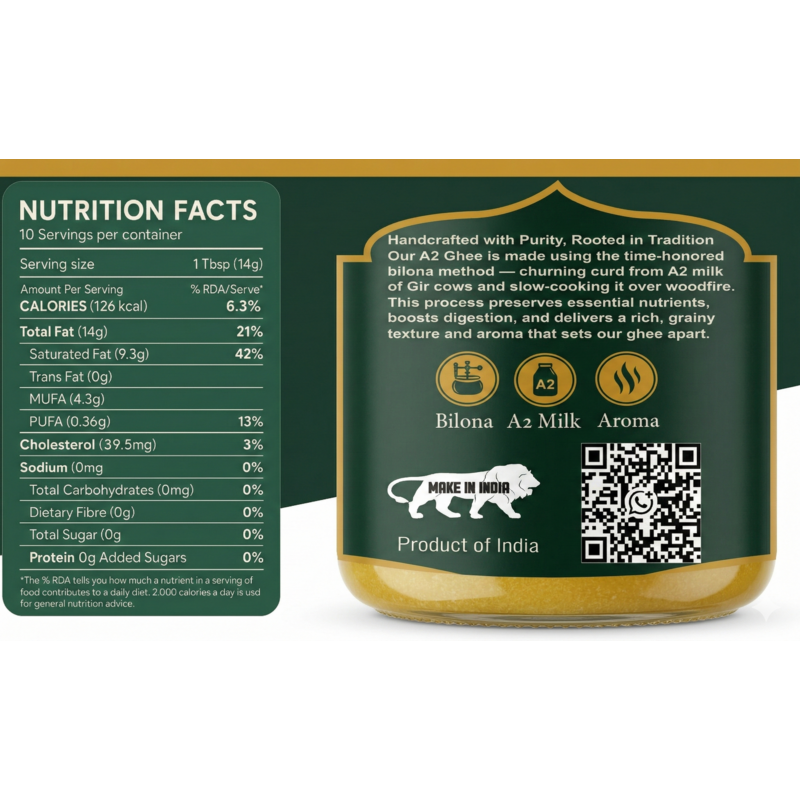
Soft Phulkas with Ghee, Every Single Time
A phulka that puffs on the flame and stays soft for hours depends on the dough, the rolling and a light touch of ghee at the end. The details, from someone who has made a lot of flat ones.
Read article →
What Is Beta-Casein? The A2 Label Explained Without the Jargon
"A2" is now printed on milk, paneer and ghee. It refers to one version of a milk protein called beta-casein. A plain explanation of what that protein is, where the A1 and A2 forms come from, and what the label does and does not mean.
Read article →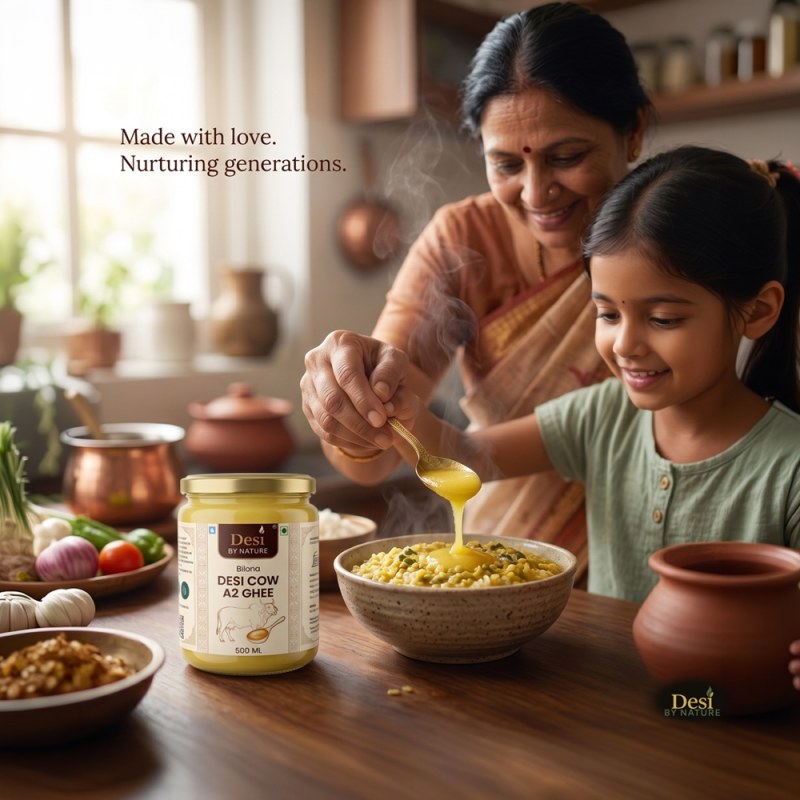
Ghee Roast Dosa at Home, Crisp and Golden
The restaurant ghee roast is thin, crackling and deeply golden. You can make it on a home tawa with the right batter consistency, a properly hot pan and less ghee than you would expect.
Read article →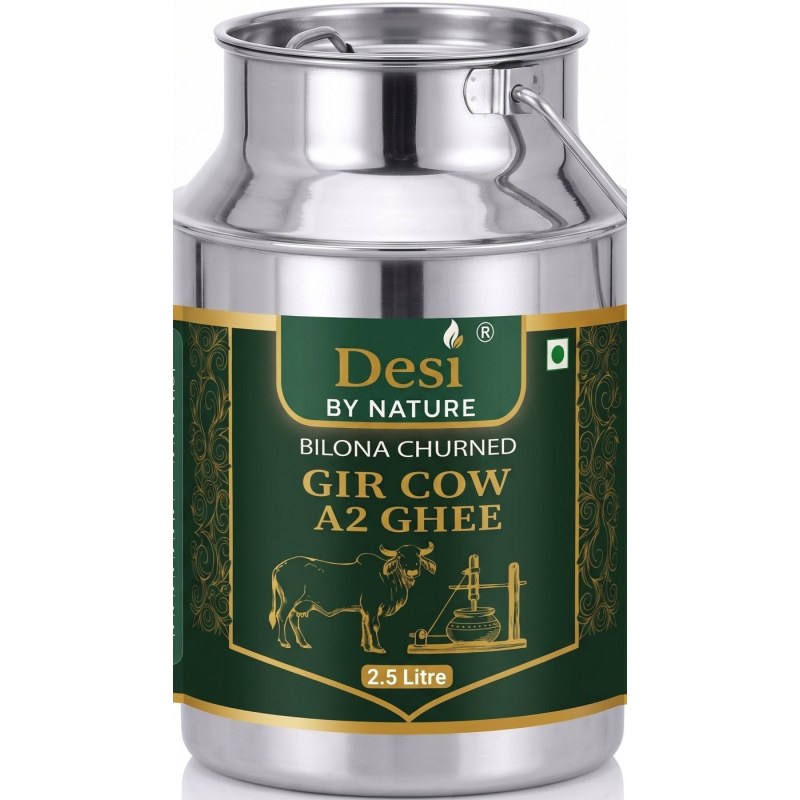
A2 Gir Cow Ghee vs Desi Cow A2 Ghee: Which Should You Buy?
We sell two A2 ghees, and customers reasonably ask what the difference is and whether the more expensive one is worth it. A straight answer, including when we would recommend the cheaper jar.
Read article →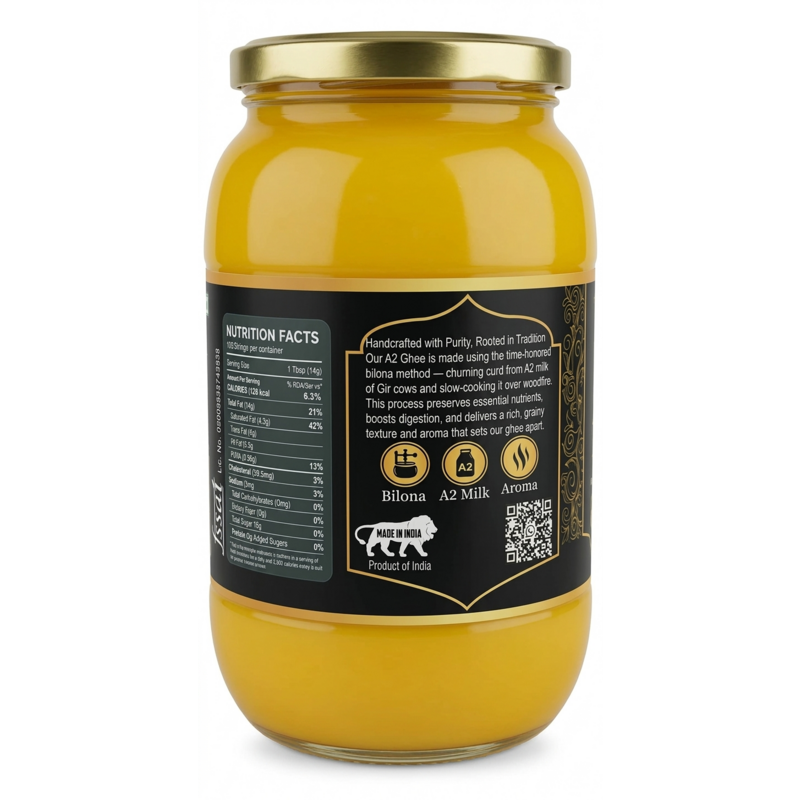
Dal Tadka with Ghee: How to Get the Tempering Right
A plain toor dal becomes dal tadka in about ninety seconds of hot ghee and spices. Those ninety seconds are where most home versions go wrong. Here is the order, the heat and the timing.
Read article →
How Bilona Ghee Is Made, Step by Step
From boiling the milk to straining the finished ghee, a walk through the bilona process as it is done in traditional dairies, including the parts that take the most time and the reasons each one exists.
Read article →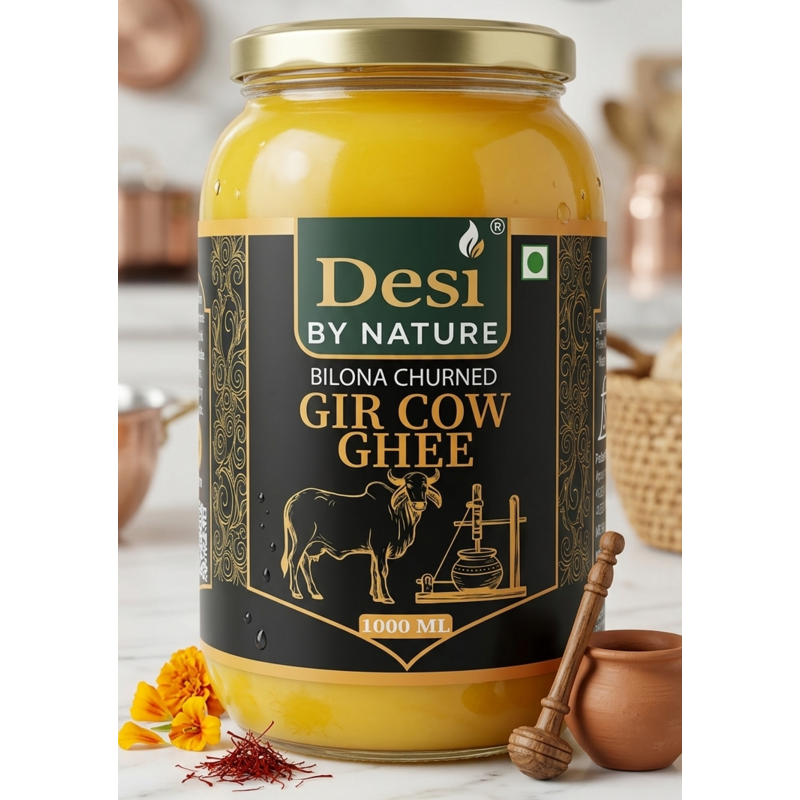
Ghee Rice: The Simple Version Worth Getting Right
Ghee rice is five ingredients and twenty-five minutes, which is exactly why small details decide whether it is fragrant and separate or heavy and clumped. Here is the method we keep coming back to.
Read article →
How to Choose Good Ghee in India: A Buyer's Checklist
Ghee shelves have never been more crowded, or more confusing. A practical checklist for choosing a jar you will be happy with, from the label and the price to the smell when you first open it.
Read article →FSSAI Standards for Ghee: What the Numbers on a Lab Report Mean
Moisture, free fatty acids, Baudouin, BR reading, Reichert Meissl value. A plain-language guide to the parameters Indian ghee is legally tested against, what each one detects, and how to read a test report you have been handed.
Read article →Why Is My Ghee Grainy? What Danedar Texture Actually Means
Grainy ghee is not spoiled ghee. That danedar texture comes from how the fat crystallises as it cools, and it is generally a good sign. Here is what causes it, why smooth ghee is not necessarily worse, and why graininess alone is not proof of anything.
Read article →Bilona vs Cream-Separated Ghee: The Real Difference
Bilona ghee is churned from curd. Most commercial ghee is made from centrifuged cream. The difference is a fermentation step, roughly three times the milk, and a genuinely different flavour. Here is how to tell which one you are buying.
Read article →A2 vs A1 Milk: What It Means, and What It Means for Ghee
A2 and A1 describe two forms of beta-casein, a milk protein. Indigenous Indian cattle produce mostly A2. But ghee is almost entirely fat and contains very little protein, so here is an honest account of what an A2 claim on a jar of ghee actually tells you.
Read article →The Baudouin Test: How India Detects Vanaspati in Ghee
The official FSSAI test for vanaspati adulteration in ghee does not detect vanaspati at all. It detects sesame oil. Here is why that is deliberate, how the test works, and why you should not attempt it at home.
Read article →How to Check If Ghee Is Pure: 5 Tests You Can Do at Home
Five practical tests for adulterated ghee, from the melt test to the iodine test for starch, plus what each one can and cannot actually tell you. Includes the official FSSAI method and an honest note on where home testing stops being reliable.
Read article →
Haldi Doodh — Golden Milk the Way Grandmothers Made It
A 5-minute golden milk recipe with single-origin turmeric and a teaspoon of A2 ghee. The version that actually works for sleep and immunity.
Read article →How to Store Bilona Ghee — and Why It Goes Solid in Winter
A short guide to storing pure A2 Bilona ghee for maximum aroma. Plus, why a solid jar in December is actually a good sign.
Read article →Moong Dal Khichdi with A2 Bilona Ghee
A 30-minute, one-pot khichdi finished with a generous spoon of A2 Bilona Ghee — the simplest comfort meal in Indian kitchens.
Read article →