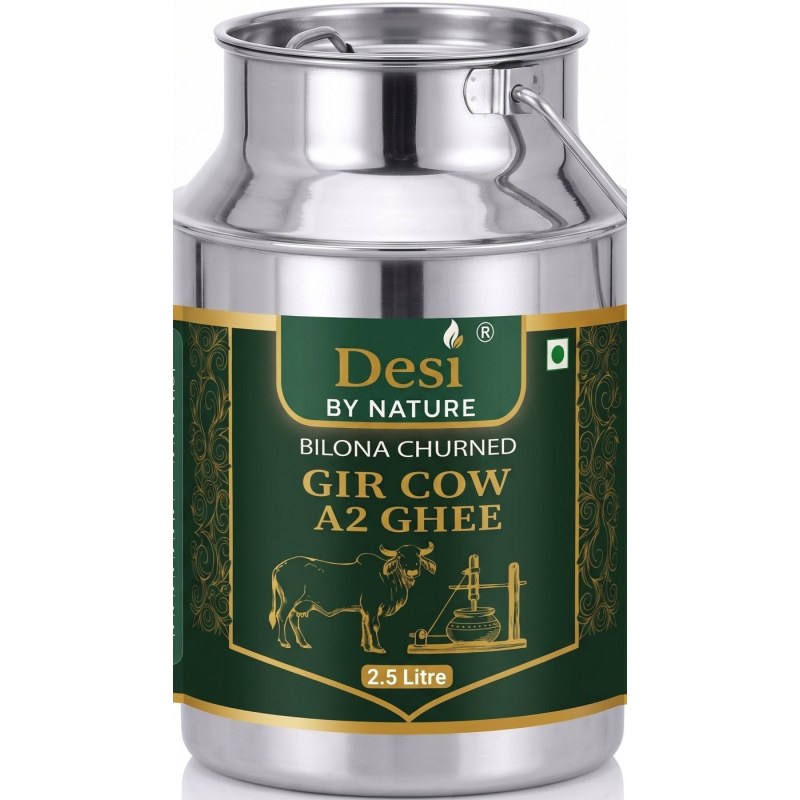
Ghee is a stable food. Kept sealed and away from heat and light, it lasts for months. But it is also a fat, and fats are sensitive to three things: oxygen, light and the absorption of other flavours. Packaging affects all three. It is not the most important thing about a jar of ghee, but it is not irrelevant either.
Glass
The good: Glass is inert. It does not pass flavours into the fat or absorb odours from it, and it is completely impermeable to air when the lid is sound. You can see the ghee, which lets you check its colour and texture before you buy. Glass jars are easy to clean and reuse, and they do not stain.
The trade-offs: Glass is heavy, which raises shipping costs, and it breaks. Clear glass lets light through, so glass jars are best kept in a cupboard rather than on a sunny counter. Glass also costs a brand noticeably more than plastic.
Plastic tubs and pouches
The good: Light, cheap, unbreakable and easy to transport. Food-grade plastics used for ghee are approved for contact with food, and for most households using a tub within a couple of months, it works fine.
The trade-offs: Plastics are slightly permeable to oxygen and to odours over time. A tub of ghee stored for months in a warm warehouse or near strongly scented goods can pick up faint off notes. Plastic tubs are also harder to clean thoroughly once greasy, and pouches are awkward to spoon from, so ghee is often moved into another container anyway.
Tin and metal cans
The good: Tins block light completely, are sturdy and have long been the standard for large quantities. Many families remember ghee arriving in big tins.
The trade-offs: Once opened, a tin is hard to reseal well, and a partly used tin exposes the remaining ghee to a lot of air every time it is opened. A dented or rusting tin is worth avoiding.
Stainless steel dolchi
The good: A food-grade steel dolchi, the milk-can shaped container with a lid and handle, is durable, blocks light, is easy to clean and lasts for years. It suits households that use a lot of ghee, and families often keep the dolchi long after the ghee is finished.
The trade-offs: You cannot see inside it. And like any large container, it is best used as a store rather than opened for every spoonful. Decant a smaller amount into a jar for daily use.
What actually matters most
Honestly, how you store and use ghee affects freshness more than the container it came in. A few habits make the biggest difference:
- Keep the lid closed and the container away from the stove.
- Use a clean, dry spoon every time. Water and food crumbs are what make ghee spoil.
- Store it in a cool, dark cupboard.
- For large quantities, decant what you need for a week or two.
We have a longer guide on how to store bilona ghee through the seasons.
What packaging tells you about a brand
Packaging is a cost, and where a brand spends money is informative. Choosing glass over plastic is a decision to spend more on every unit and pay more to ship it. It does not prove the ghee inside is good. It does suggest the business cares about the product arriving in the condition it left.
Why we use glass and steel
Our ghee jars are glass because we want the ghee to smell the same on the day you open it as it did on the day it was packed, and because we like that you can see the texture. Our larger 2.5 and 5 litre packs come in steel dolchis, since glass at that size is impractical and a dolchi is useful in any Indian kitchen afterwards.
You can see both on the A2 Gir Cow Ghee page, where the photos change with each size.