In Tamil homes and temple kitchens, ven pongal is breakfast, prasadam and comfort food all at once. It is plain in the best sense: rice and moong dal cooked to a soft, almost creamy consistency, seasoned with black pepper, cumin and ginger, and finished with a generous tempering of ghee. There is nowhere for a poor ingredient to hide, which is why the ghee matters.
Ingredients
- ½ cup raw rice (ponni or sona masoori)
- ¼ cup split yellow moong dal
- 3½ cups water
- ½ cup milk (optional, for extra softness)
- 1 tsp salt
- ¼ tsp turmeric (optional, not traditional in every home)
For the tempering
- 3 tbsp ghee
- 1 tsp whole black pepper, coarsely crushed
- 1 tsp cumin seeds
- 1 tbsp finely chopped ginger
- 10 to 12 cashews, halved
- 1 sprig curry leaves
- A pinch of hing
Method
- Roast the dal. Dry roast the moong dal in a heavy pan on low heat for 2 to 3 minutes, stirring, until it smells nutty and turns a shade darker. Do not let it brown.
- Wash. Combine the roasted dal with the rice and wash together two or three times.
- Pressure cook. Add water, salt and turmeric if using. Pressure cook for 5 to 6 whistles on medium, until both rice and dal are completely soft. Let the pressure release naturally.
- Mash to consistency. Open the cooker and mash well with a ladle. Add the milk or a little hot water to loosen it. It should be soft and thick, like a loose porridge. Pongal firms up as it cools, so keep it slightly looser than you want.
- Temper. Heat the ghee in a small pan on medium. Fry the cashews until golden and set them aside. Add the cumin and pepper and let them sizzle for 15 seconds. Add ginger, curry leaves and hing, and fry for another 20 seconds.
- Combine. Pour the tempering over the pongal, add the cashews and mix well. Cover and let it sit for 2 minutes before serving.
The details
Roast the dal. It adds a toasted depth that you notice when it is missing.
Crush the pepper yourself. Coarsely crushed black pepper releases bursts of heat as you eat. Pre-ground pepper tastes dusty by comparison.
Do not be shy with ghee. Pongal traditionally uses a lot of it, and the dish tastes sparse without enough. Three tablespoons for four servings is moderate. Temple versions use considerably more. A spoon of warm ghee on each serving at the table is common in many homes.
To serve
Coconut chutney and sambar are the classic pairings. Some families also serve it with gothsu, a tangy brinjal and tamarind gravy, which cuts through the richness beautifully.
Ven pongal and sakkarai pongal
Ven means white, and this is the savoury version. Its sweet counterpart, sakkarai pongal, is cooked with jaggery and cardamom and is made for Pongal, the harvest festival, and for temple offerings. Both depend on ghee, and both are best made with one that smells of something when you warm it.
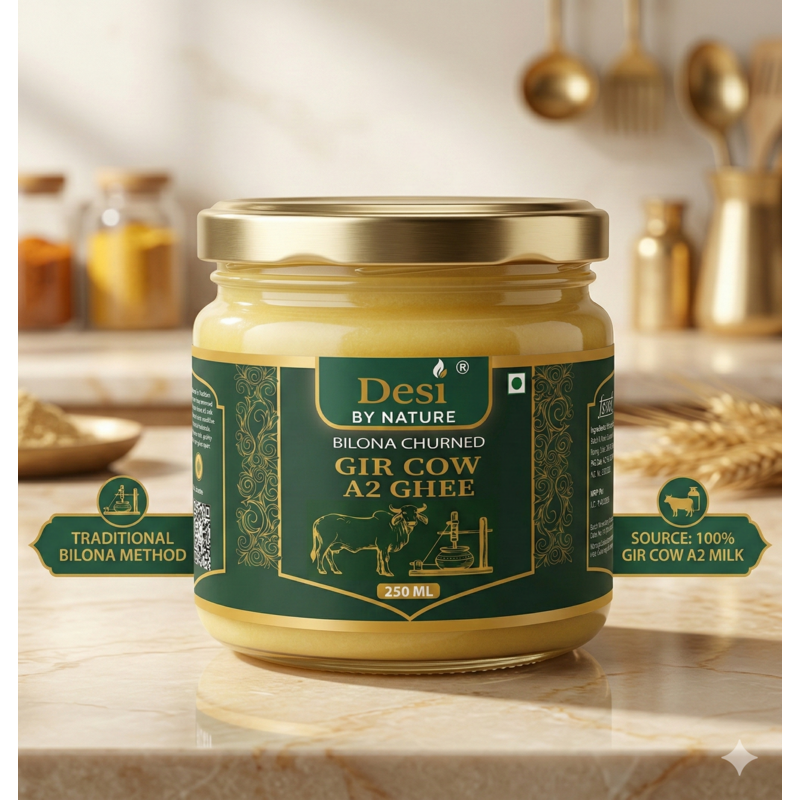
We use our A2 Gir Cow Ghee for pongal, since so much of the flavour comes from the tempering.