Few breakfasts inspire as much loyalty as aloo paratha. Every family has a version and a person who makes it best. The universal problems are also the same everywhere: parathas that burst while rolling, fillings that taste of little, and parathas that go leathery ten minutes after they leave the tawa. Each one has a specific fix.
For the dough
- 2 cups whole wheat atta
- ½ tsp salt
- 1 tsp ghee
- About ¾ cup water
For the filling
- 3 medium potatoes (about 400 g), boiled and peeled
- 1 small onion, very finely chopped (optional)
- 1 green chilli, finely chopped
- 1 tsp grated ginger
- 2 tbsp chopped coriander
- ½ tsp roasted cumin powder
- ½ tsp amchur (dry mango powder)
- ½ tsp red chilli powder
- ¼ tsp ajwain, crushed between your palms
- Salt to taste
For cooking
- Ghee, about 1½ tsp per paratha
Method
- Make the dough. Knead atta, salt, ghee and water into a soft, smooth dough, slightly softer than for rotis. Cover and rest for 30 minutes.
- Prepare dry potatoes. Boil the potatoes until just cooked, not waterlogged. Peel and let them cool completely, ideally for an hour. Grate them rather than mashing, which keeps the texture light and avoids lumps that tear the dough.
- Mix the filling. Combine everything except the salt. Add salt only just before you start rolling, because salt draws moisture out of the onion and potato and a wet filling is what bursts parathas.
- Shape. Divide the dough into 6 balls and the filling into 6 portions of roughly the same size. Flatten a dough ball into a 4 inch disc, thinner at the edges than the centre. Place the filling in the middle, bring the edges up and pinch them together to seal. Pinch off any excess dough at the top.
- Roll gently. Flatten the stuffed ball with your palm, seam side down. Dust with flour and roll lightly from the centre outward into a 7 to 8 inch circle. Do not press hard. If filling peeks through, patch it with a pinch of flour and keep going.
- Cook dry first. Place on a medium-hot tawa. Cook for about 30 seconds until small bubbles appear, then flip. Cook the other side for 30 seconds.
- Then add ghee. Spread about ¾ tsp ghee on the top side, flip, and press gently around the edges with a spatula so the paratha cooks evenly. Spread ghee on the second side and flip again. Cook until both sides have deep golden-brown spots and the edges are crisp, about 1 minute per side.
The details that matter
Cold, dry filling. Warm potatoes release steam and moisture inside the dough. Cool them first, and salt at the last moment.
Ghee after the first flip, not before. Adding fat to a raw paratha makes it slippery and pale. A brief dry cook sets the surface so the ghee crisps it rather than soaking in.
Medium heat. Too hot and the outside burns before the dough in the middle is cooked. A stuffed paratha takes 3 to 4 minutes in total.
How to serve
The Punjabi way is with a cube of white butter melting on top, a bowl of thick curd and a spoon of mango or mixed pickle. A lighter approach, and our preference, is a small spoon of warm ghee over the hot paratha instead of butter. It keeps the paratha soft for longer and tastes of more.
For a packed lunch
Let parathas cool on a rack for two minutes so steam can escape, then wrap in foil or a cotton cloth. Packing them hot makes them soggy.
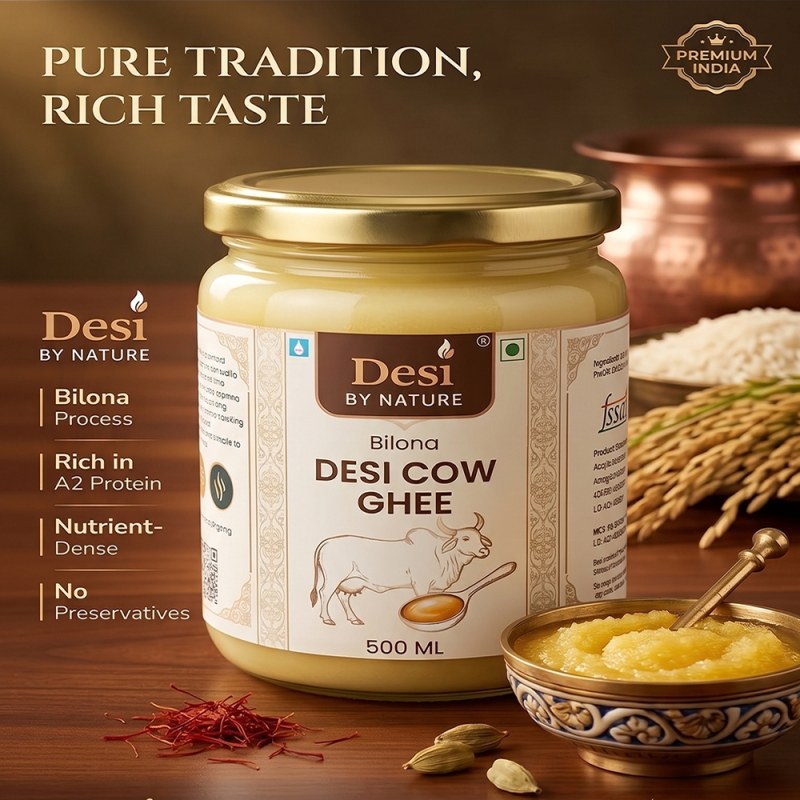
Ghee is a big part of how an aloo paratha tastes, so this is a good place for a flavourful one. We use our Desi Cow A2 Ghee.