Besan ladoo is the sweet that appears in every Diwali box, and one of the few that most families still make at home. A good one is soft, slightly grainy, melts on the tongue and smells deeply of roasted besan and ghee. A poor one tastes raw, sticks to the roof of your mouth, or crumbles into dust. Almost all of the difference is in how long and how gently the besan is roasted.
Ingredients
- 2 cups besan (preferably coarse, sometimes sold as ladoo besan)
- ¾ cup ghee, plus a little extra if needed
- 1 cup powdered sugar or bura (tagar), or to taste
- ½ tsp cardamom powder
- 2 tbsp chopped almonds or pistachios
- 1 tbsp melon seeds (optional)
Method
- Sift the besan to remove lumps.
- Warm the ghee. In a heavy kadai, melt the ghee on low heat.
- Add the besan and start roasting. Add the besan and stir continuously on low heat.
- Watch the stages.
- First 5 minutes: the mixture looks thick, dry and lumpy. Keep stirring and breaking lumps.
- 10 to 15 minutes: it loosens and becomes a thick paste. The colour begins to change. It smells like raw besan.
- 20 to 25 minutes: it turns light golden brown, becomes flowing and glossy as ghee separates from it, and the smell turns nutty and sweet. This is where you want to be.
- Add nuts. Add the nuts and melon seeds for the last minute of roasting.
- Cool until warm. Transfer to a plate or bowl and let it cool until it is warm but not hot, about 15 minutes. If you add sugar while the mixture is hot, the sugar melts and the ladoos turn sticky and flat.
- Add sugar. Add powdered sugar and cardamom, and mix well with your hands.
- Shape. Take a portion, press it firmly in your palm and roll into a ball. If it will not hold, add a teaspoon of warm melted ghee to the mixture.
Why low heat and patience matter
Besan burns easily and unevenly. On high heat, the outside browns while the inside stays raw, and you get a ladoo that tastes bitter and uncooked at the same time. On low heat, the flour cooks right through and develops a sweet, nutty flavour. Twenty to twenty-five minutes of stirring is normal, and there is no shortcut.
The ghee ratio
Traditional recipes use somewhere between a third and a half as much ghee as besan by volume. More ghee gives a softer, richer ladoo that melts in the mouth. Less gives a firmer, drier one. The mixture should look glossy once roasted. If it looks dry and sandy, add a little more ghee.
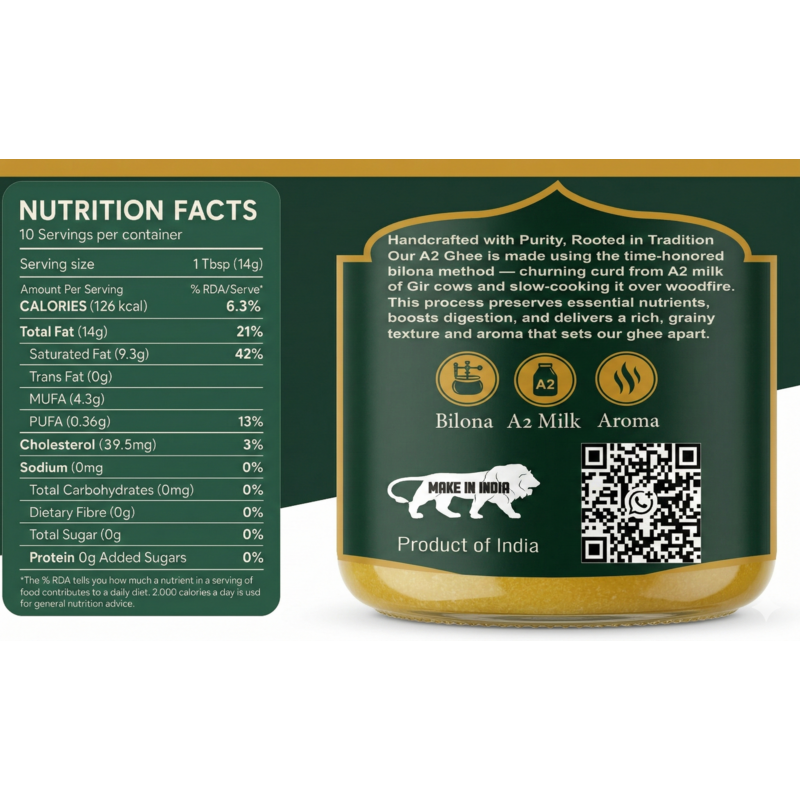
Since ghee is so much of the flavour here, a fragrant ghee makes a noticeably better ladoo.
Fixes
Ladoos do not hold shape: add a little warm ghee, or a tablespoon of warm milk (which shortens shelf life to a few days).
Ladoos are too soft and spread: the mixture was too hot when sugar was added, or there is too much ghee. Chill the mixture for 10 minutes, then shape.
Ladoos taste raw: the besan was not roasted long enough. Unfortunately, this cannot be fixed after sugar is added.
Bura or powdered sugar
Bura, a traditional coarse sugar, gives a slightly grainy, melt-in-the-mouth texture that many families prefer. Powdered sugar works well too, but sift it to avoid lumps.
Storage
In an airtight container at room temperature, besan ladoos keep for about two weeks.
For Diwali sweets we use A2 Gir Cow Ghee, since its aroma is most of what makes a besan ladoo memorable.