The ghee roast is the showpiece of the dosa world: a paper-thin, crackling, deep gold cone that shatters when you tear it. In Karnataka and Tamil Nadu restaurants it arrives rolled so long it hangs off the plate. At home it is entirely achievable. The trick is less about the recipe and more about batter, heat and patience.
For the batter
- 2 cups idli rice or regular raw rice
- ½ cup whole urad dal
- 2 tbsp chana dal
- ½ tsp methi (fenugreek) seeds
- 1 tsp salt
- 1 tsp sugar (helps the colour)
For roasting
- Ghee, about 1 tsp per dosa
- A cut onion or half a potato, for wiping the tawa
Method
- Soak. Soak the rice in one bowl, and the urad dal, chana dal and methi together in another, for 5 to 6 hours.
- Grind. Grind the dal mixture first with a little cold water until light and fluffy. Grind the rice slightly coarser. Combine, add salt and mix well with your hand. The warmth of your hand helps fermentation.
- Ferment. Cover and leave in a warm place for 8 to 12 hours, until risen and bubbly. In winter, keep it inside an oven with just the light on.
- Adjust the batter. Stir in the sugar. For ghee roast, the batter should be thinner than for regular dosa: it should flow off a ladle in a steady ribbon, about the thickness of pouring cream. Add water a spoon at a time.
- Heat the tawa. Use a well-seasoned cast iron tawa if you have one. Heat it on medium-high for a few minutes. Sprinkle water: it should dance and evaporate at once. Lower the heat to medium and wipe the tawa with the cut onion.
- Spread. Pour a ladle of batter into the centre and spread it outward in a quick spiral with the back of the ladle, as thin as you can. Small holes are fine.
- Add ghee. Drizzle about ¾ tsp ghee around the edges and a few drops over the surface.
- Roast slowly. Let it cook on medium without touching it for 1½ to 2 minutes. The edges lift, and the base turns an even deep gold. Do not flip it.
- Roll and serve. Loosen with a thin spatula, fold into a cone or a long roll, and serve at once.
Why it goes wrong at home
The tawa is too cold, or too hot. Too cold and the batter sticks and stays pale. Too hot and it sets in patches before you can spread it. The water test before each dosa is worth the three seconds. Between dosas, sprinkle water and wipe with the onion to bring the surface temperature back down.
The batter is too thick. Thick batter makes a soft, spongy dosa however much ghee you add. Thin it.
Too much ghee too soon. A pool of ghee on the tawa before spreading makes the batter slide and bunch. Spread first, ghee second.
Impatience. The golden colour and crackle come in the last 30 seconds. Give it that time.
About the ghee
This is the dosa where ghee is the flavour, not a cooking medium. A teaspoon of fragrant ghee will do more than a tablespoon of a bland one, because what you want is that toasted, nutty aroma soaking into the crisp base. Ghee also browns more evenly than oil on a tawa, which is where the colour comes from.
To serve
Coconut chutney and a thin sambar are traditional. A spoon of gunpowder podi mixed with a little warm ghee on the side is not traditional everywhere, but it is hard to argue with.
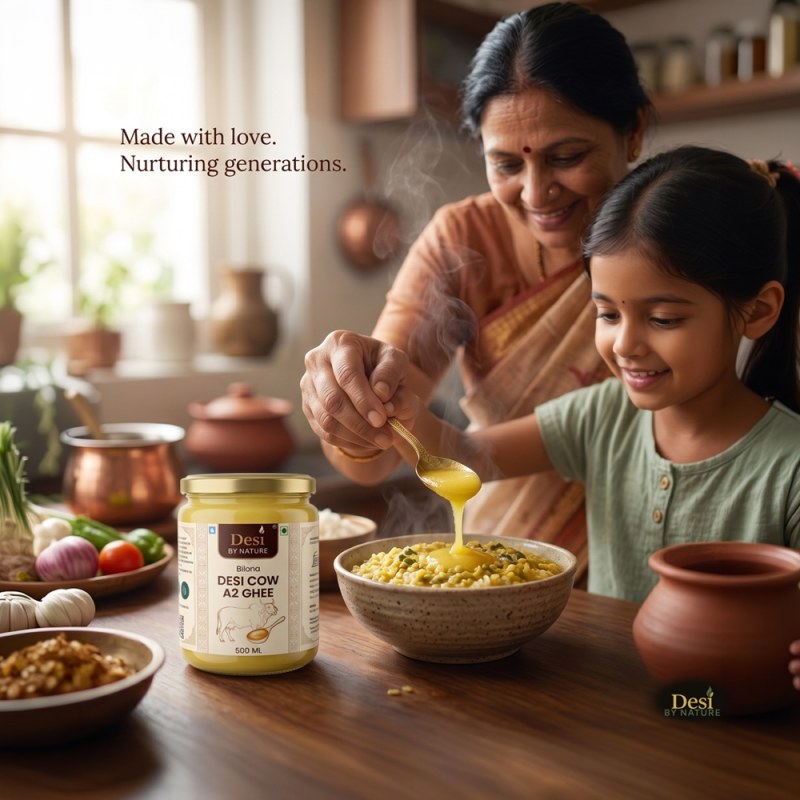
A batch of dosa batter goes through more ghee than you expect, which is why a 1 litre jar of Desi Cow A2 Ghee tends to live next to the tawa on dosa weekends.