Punjabi kadhi pakora is thick, tangy and deeply comforting, a winter lunch with rice that tends to disappear faster than anyone planned. It has two reputations: that it takes forever, and that it splits. It does take an hour, most of it hands-off simmering. And it only splits when you skip one or two simple steps.
For the pakoras
- 1 cup besan (gram flour)
- 1 medium onion, thinly sliced
- 1 green chilli, chopped
- ½ tsp ajwain
- ½ tsp red chilli powder
- ¼ tsp baking soda
- ½ tsp salt
- About ⅓ cup water
- Oil or ghee for frying
For the kadhi
- 2 cups sour curd (2 or 3 days old is ideal)
- ½ cup besan
- 4 cups water
- ½ tsp turmeric
- 1 tsp salt
- 1 tbsp ghee
- ½ tsp methi seeds
- 1 tsp cumin seeds
- 1 tbsp grated ginger
- 2 green chillies, slit
For the final tadka
- 1½ tbsp ghee
- ½ tsp cumin seeds
- 3 dried red chillies
- A pinch of hing
- 1 tsp Kashmiri red chilli powder
Method
- Whisk the base cold. In a large bowl, whisk the curd, besan, turmeric and water until completely smooth, with no lumps at all. This must be done before heating.
- Temper. In a heavy pan, heat 1 tbsp ghee. Add methi seeds and cumin, and let them sizzle. Add ginger and green chillies.
- Add the curd mixture and stir until it boils. Pour in the curd mixture and stir continuously on medium heat until it comes to a boil, about 8 to 10 minutes. Do not stop stirring and do not add salt yet. This is the step that prevents splitting.
- Simmer slowly. Once boiling, lower the heat and simmer for 30 to 40 minutes, stirring every few minutes. The kadhi thickens, loses its raw besan taste and turns creamy. Add salt now.
- Make the pakoras meanwhile. Mix pakora ingredients into a thick batter that coats the onions. Drop small spoonfuls into hot fat and fry on medium until golden and cooked through. Drain.
- Add pakoras. Add the pakoras to the kadhi 10 minutes before serving. They will soak up the kadhi and turn soft. If you prefer them firmer, add them just before serving.
- Final tadka. Heat 1½ tbsp ghee until hot. Add cumin and dried chillies, then hing. Turn off the heat, add Kashmiri chilli powder and immediately pour over the kadhi.
Why kadhi splits, and how to avoid it
Salt added early. Salt encourages curd proteins to separate when heated. Add it after the kadhi has boiled.
Not enough stirring. Until it boils, the curd and besan need constant movement. Once the besan has thickened and cooked, the mixture is stable.
Lumps in the base. Besan added to hot liquid or not whisked well forms lumps that never dissolve.
The curd matters
Kadhi needs sourness. Fresh curd gives a flat kadhi. If your curd is fresh, leave it out on the counter for a day, or add a little lemon juice at the end.
The tadka matters more
The red, glistening ghee tadka on top of kadhi is its signature. Pour it on at the table if you can: the sizzle, the colour spreading across the yellow surface, the smell of cumin and chilli. It is the last thing that goes in and the first thing people notice.
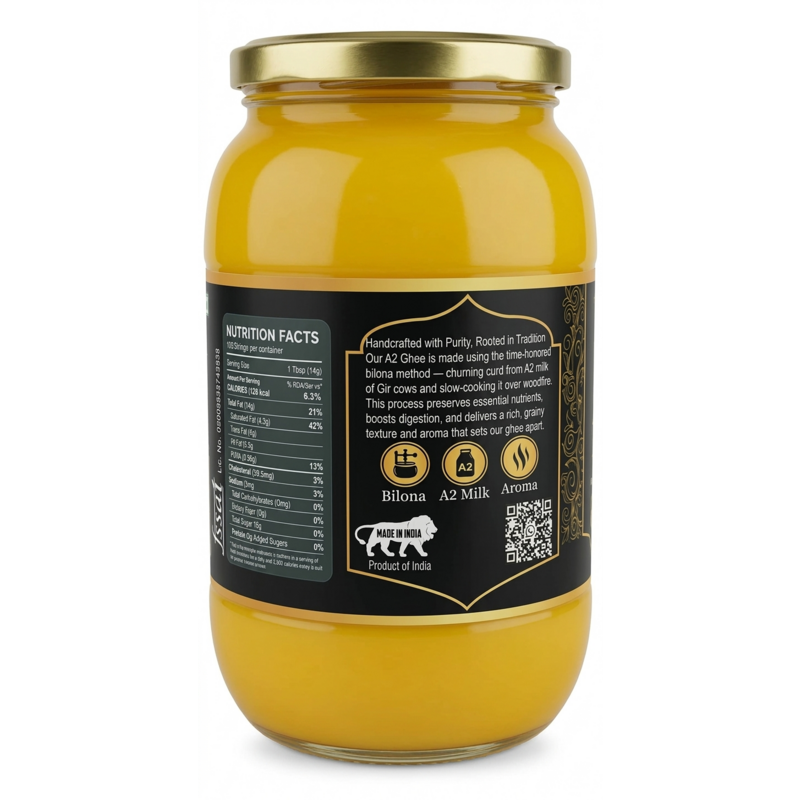
Kadhi is one of those dishes that is better on the second day, as long as you make a fresh tadka for it. Keep a jar of Desi Cow A2 Ghee handy for exactly that.