Moong dal halwa is a sweet of occasions: winter weddings, Diwali, and the kind of family gathering where someone volunteers to stand at the kadai for an hour. It is rich and grainy with a deep golden colour and a toasty aroma, and it is one of the best showcases for ghee in Indian cooking. Rajasthan claims it, and nobody argues.
Ingredients
- 1 cup yellow moong dal (split, skinless)
- ¾ cup ghee
- 1 cup full-cream milk
- ½ cup water
- ¾ to 1 cup sugar, to taste
- ¼ cup khoya, crumbled (optional, for extra richness)
- ½ tsp cardamom powder
- A pinch of saffron, soaked in 2 tbsp warm milk
- 2 tbsp each sliced almonds and pistachios
Method
- Soak the dal. Rinse and soak the moong dal for 4 to 5 hours, or overnight.
- Grind coarsely. Drain completely. Grind to a coarse, thick paste with little or no water. It should be grainy like fine sooji, not smooth.
- Prepare the syrup. Heat milk, water and sugar together until the sugar dissolves. Add saffron. Keep warm.
- Melt the ghee. In a heavy, wide kadai, melt the ghee on medium-low heat.
- Add the dal paste. Add the paste and start stirring. For the first 10 minutes it will look like a sticky, lumpy dough that clings to the spatula. Keep stirring and breaking it up.
- Keep going. Between 20 and 35 minutes, it loosens and becomes granular. The colour darkens from pale yellow to golden. Stir constantly and scrape the bottom so nothing catches.
- Watch for the change. At around 40 to 45 minutes, the halwa turns a deep golden brown, becomes crumbly and grainy, releases ghee at the edges, and smells strongly of roasted nuts. This is the point.
- Add khoya. If using, add crumbled khoya and cook for 2 more minutes.
- Add syrup. Stand back and pour in the warm milk syrup gradually, stirring. It will splutter and bubble hard.
- Cook until it comes together. Keep stirring for 8 to 10 minutes until the liquid is absorbed and the halwa leaves the sides of the pan, glossy with ghee.
- Finish. Add cardamom and nuts.
The things that decide the result
A coarse paste. Grinding too smooth gives a pasty, sticky halwa. Grainy dal gives the characteristic texture.
A heavy, wide kadai. It spreads the heat and reduces sticking. A thin pan will burn it.
Constant stirring. This dal sticks the moment you walk away. Plan to stay at the stove.
Roast until deep golden. Under-roasted moong dal halwa tastes of raw lentils. The long roast is the flavour.
About the ghee
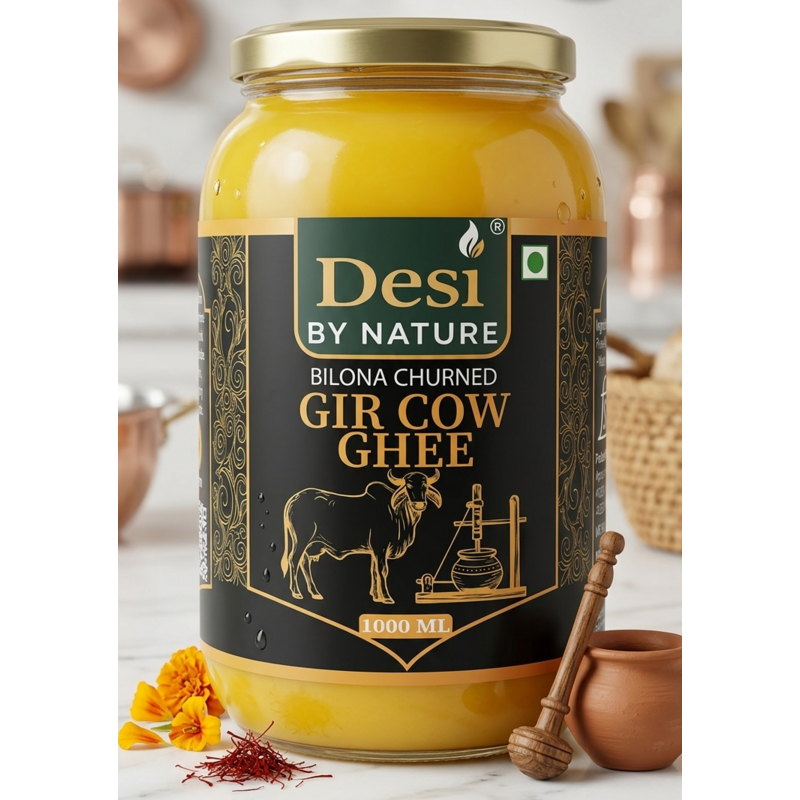
Moong dal halwa needs a lot of ghee, and trying to reduce it too much makes the roasting very difficult, since the dal sticks and burns. Traditional recipes often use even more than we have here. Much of the halwa's aroma comes from the ghee and the browned dal cooked in it, so a flavourful ghee makes a real difference. This is festive food, and a small bowl goes a long way.
Making it ahead
Moong dal halwa keeps in the fridge for up to a week. Reheat in a pan with a spoon of ghee and a splash of milk until soft and fragrant again.
For a sweet this dependent on ghee, we use A2 Gir Cow Ghee.