Upma is one of those dishes people claim not to like, usually because they have eaten a lot of bad upma: grey, sticky and bland. Good upma is a different thing entirely. It is light and fluffy, fragrant with ghee, curry leaves and ginger, and it comes together in twenty minutes on a busy morning. The difference is in three steps that most rushed versions skip.
Ingredients
- 1 cup bombay rava (fine semolina)
- 2½ cups water
- 2 tbsp ghee, plus 1 tsp to finish
- 1 tsp mustard seeds
- 1 tsp urad dal
- 1 tsp chana dal
- 10 cashews, halved
- 1 sprig curry leaves
- 1 green chilli, slit
- 1 tsp finely chopped ginger
- 1 small onion, finely chopped
- 2 tbsp green peas or finely chopped carrot (optional)
- 1 tsp salt
- 1 tsp sugar (optional)
- Chopped coriander and a squeeze of lemon
Method
- Roast the rava. In a dry pan on medium-low, roast the rava, stirring constantly, for 5 to 6 minutes. It should smell toasty, feel sandy and look a shade paler than beige. Do not brown it. Transfer to a plate.
- Boil the water. Put the water on to boil with the salt and sugar. You want it at a rolling boil when you need it.
- Temper. In the same pan, heat 2 tbsp ghee. Add mustard seeds and let them pop. Add urad dal, chana dal and cashews, and fry until golden. Add curry leaves, green chilli and ginger for a few seconds.
- Onion and vegetables. Add the onion and cook until soft and translucent. Add peas or carrot and cook for 2 minutes.
- Add boiling water. Pour in the boiling water. Let it come back to a boil.
- Add rava slowly, stirring. Lower the heat. Add the roasted rava a little at a time with one hand while stirring continuously with the other. This is how you avoid lumps.
- Steam. Once all the rava is in and the mixture thickens, cover and cook on the lowest heat for 2 to 3 minutes.
- Finish. Turn off the heat. Add 1 tsp ghee, the coriander and lemon juice, and fluff with a fork.
Why upma turns gluey
Unroasted rava. Raw semolina releases starch quickly and turns pasty. Roasting coats and firms the grains so they swell separately. Many South Indian families roast a big batch of rava and store it, just for this.
Cold or warm water. The water must be at a proper boil. It cooks the rava instantly on contact, keeping the grains distinct.
Dumping the rava in. Pouring it all at once traps dry pockets inside a wet coating. Those are your lumps.
Too little fat. Upma needs enough ghee to coat the grains. It is not an oil-free dish, and it tastes flat when treated like one.
The ratio
For soft, fluffy upma, use about 2½ cups of water per cup of rava. For a firmer, drier upma, use 2 cups. For the soft, almost spoonable style served in some Karnataka hotels, go up to 3.
To serve
Coconut chutney, a wedge of lemon, or a spoon of sugar on the side, which is how many people in Tamil Nadu eat it. A little mango pickle works too.
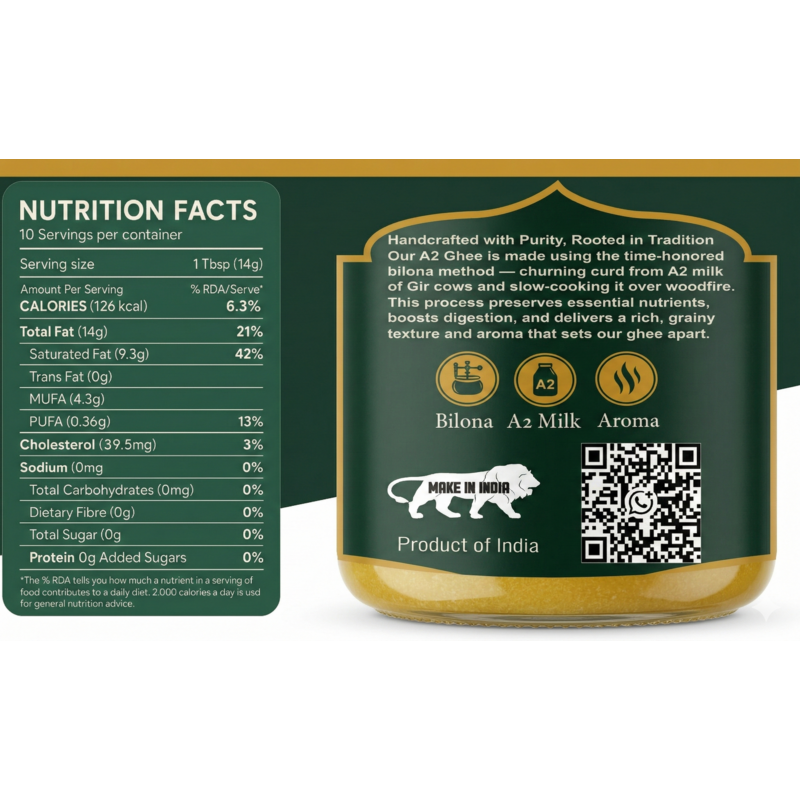
If upma has never been a favourite in your house, try it once this way, with the rava properly roasted and a spoon of Desi Cow A2 Ghee stirred in at the end, before you give up on it.