Sabudana khichdi is the Maharashtrian breakfast that becomes a national dish during Navratri and every other fasting day. When it is right, each pearl of tapioca is soft, translucent and separate, tossed with roasted peanuts, potato, green chilli and ghee. When it is wrong, it is a sticky, gluey lump. The difference is decided hours before you start cooking, when you soak the sabudana.
Ingredients
- 1 cup medium sabudana (tapioca pearls)
- ½ cup raw peanuts
- 2 tbsp ghee
- 1 tsp cumin seeds
- 2 green chillies, finely chopped
- 1 sprig curry leaves (optional, if your family uses them during vrat)
- 1 medium potato, boiled and cubed
- 1 tsp sendha namak, or to taste
- 1 tsp sugar
- 1 tbsp lemon juice
- 2 tbsp chopped coriander
- 2 tbsp grated fresh coconut (optional)
Method
- Rinse the sabudana. Rinse in a bowl of water two or three times, rubbing gently, until the water is less cloudy. This removes surface starch.
- Soak with just enough water. Drain completely, then add water to just cover the pearls, not more. Cover and soak for 4 to 6 hours, or overnight for larger pearls.
- Test. Press a pearl between your fingers. It should squash easily with no hard white centre. If there is a hard core, sprinkle a little water, cover and wait another hour.
- Drain well. Tip the soaked sabudana into a colander and let it drain for 15 to 20 minutes. Fluff it with a fork.
- Roast peanuts. Dry roast the peanuts until golden, cool, rub off the skins and crush coarsely.
- Mix. In a bowl, toss the sabudana with the crushed peanuts, sendha namak and sugar. The peanut powder coats the pearls and absorbs moisture, which helps keep them separate.
- Temper. Heat ghee in a wide pan. Add cumin seeds, green chillies and curry leaves. Add the potato and cook until lightly golden.
- Cook briefly. Add the sabudana mixture. Toss gently on medium heat for 4 to 6 minutes, until the pearls turn translucent. Do not overcook; sabudana goes sticky the moment it cooks too long.
- Finish. Turn off the heat. Add lemon juice, coriander and coconut. Serve immediately.
Why sabudana goes sticky
Too much soaking water. Waterlogged pearls release starch and become mushy.
Not draining enough. Wet sabudana steams in the pan and clumps.
Overcooking. Once translucent, it is done. More heat makes it gluey.
Stirring too hard. Toss gently, lifting from the bottom, rather than stirring vigorously.
Why ghee
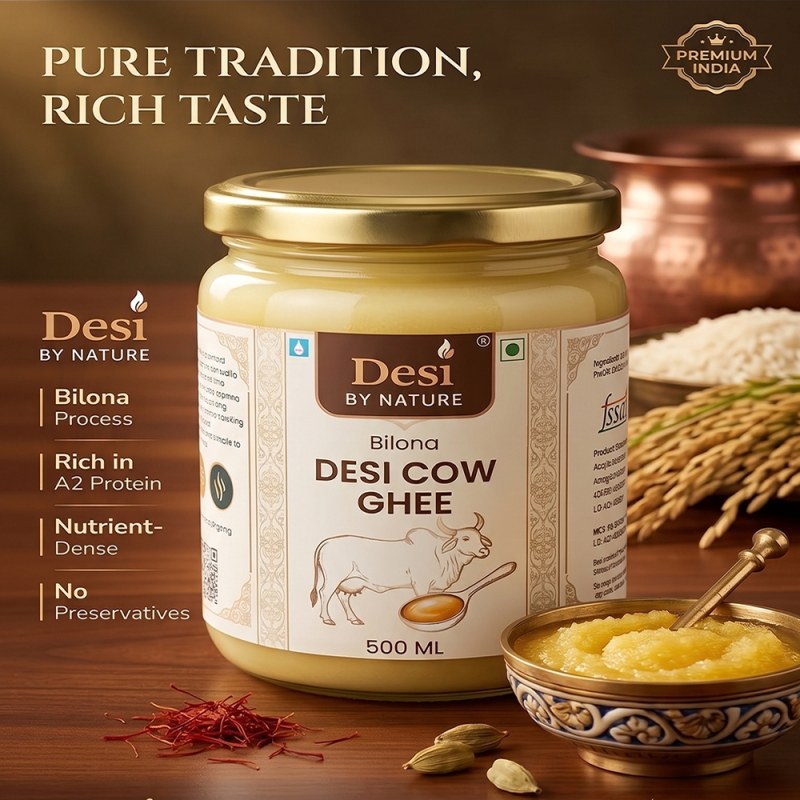
Ghee is the traditional fat for vrat cooking in many families, and it helps sabudana stay separate by coating each pearl. It also brings out the flavour of the roasted peanuts and cumin. Sabudana khichdi made with oil tastes noticeably plainer.
Serve with
A bowl of cold curd or a cucumber raita. The contrast of cool curd with the warm, peppery khichdi is part of the pleasure.
If it does turn sticky, do not despair: press it into small patties, shallow fry them in Desi Cow A2 Ghee and call them sabudana tikkis.