Singhare ka halwa is one of the quickest sweets you can make during Navratri, and one of the most satisfying. Water chestnut flour, roasted in ghee, turns from pale and chalky to golden and nutty, and then transforms into a soft, glossy halwa when liquid goes in. The only thing that can go wrong is rushing the roasting, which leaves it tasting raw.
Ingredients
- ½ cup singhare ka atta (water chestnut flour)
- ¼ cup ghee, plus 1 tsp to finish
- ⅓ to ½ cup sugar, or ½ cup grated jaggery
- 1½ cups water, or 1 cup water and ½ cup milk
- ¼ tsp cardamom powder
- 1 tbsp chopped almonds
- 1 tbsp chopped cashews
- A few strands of saffron, soaked in 1 tbsp warm milk (optional)
Method
- Warm the liquid. Heat the water (and milk if using) with the sugar until the sugar dissolves. Keep it hot on a back burner. If using jaggery, dissolve it in the hot water separately and strain it.
- Heat the ghee. In a heavy kadai, warm the ghee on low heat.
- Roast the flour. Add the singhare ka atta and stir continuously on low heat. At first it will look lumpy and pale. After 6 to 8 minutes it loosens, turns a shade of light brown and smells strongly nutty. Keep going until you reach that point.
- Add the hot liquid carefully. Stand back and pour the hot sweetened liquid in slowly while stirring. It will splutter and steam fiercely.
- Stir until thick. Keep stirring on low to medium heat. The flour absorbs liquid very quickly. In 2 to 3 minutes it thickens and begins leaving the sides of the pan.
- Finish. Add cardamom, saffron and nuts, and 1 tsp ghee. Stir until the halwa is glossy and comes together in a soft mass.
The roasting is everything
Singhara flour that is not roasted enough tastes floury and slightly bitter, and gives a pasty halwa. Roast it properly and it turns sweet, aromatic and much more pleasant. The colour should change to a light golden brown, and the smell should remind you of roasted nuts. Low heat and constant stirring prevent burning.
Why the liquid must be hot
Cold or warm liquid poured onto hot roasted flour causes lumps. Hot liquid is absorbed evenly.
How much ghee
This halwa needs enough ghee to roast the flour evenly and keep it from clumping. A quarter cup for half a cup of flour gives a soft, glossy halwa. Less ghee gives a drier, crumbly texture. Ghee is also what makes singhara flour taste good: its earthy flavour is softened by the nuttiness of well-roasted ghee.
Jaggery version
Jaggery gives a deeper, caramel sweetness and a darker colour. Always dissolve jaggery in hot water and strain it first, since it can contain impurities. Do not boil milk with jaggery, as it may split; use water only, or add a splash of milk right at the end.
Serving
Serve warm, as prasad or after a vrat meal. It firms up as it cools; loosen it with a spoon of hot milk and a little ghee when reheating.
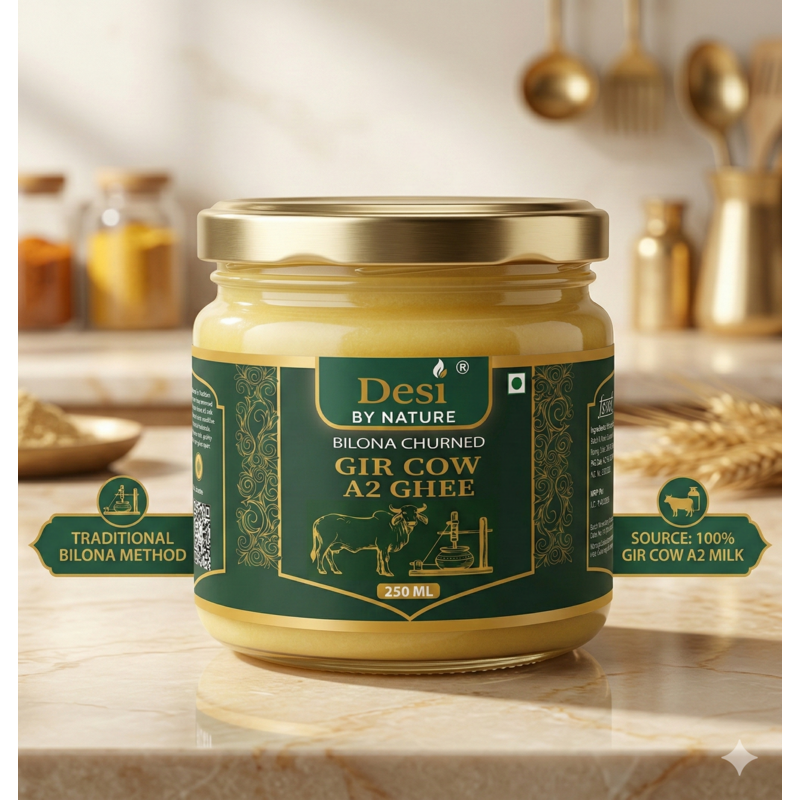
For vrat sweets, many families prefer cow ghee. We make this with A2 Gir Cow Ghee.