A good phulka is one of the quiet achievements of an Indian kitchen: thin, soft, blistered in spots, puffed up like a balloon on the flame and brushed with a little ghee before it goes into the casserole. It looks effortless when someone who has made ten thousand of them does it. For the rest of us, a few specifics help.
Ingredients
- 2 cups whole wheat atta, plus extra for dusting
- About ¾ cup lukewarm water (it varies with the flour)
- ¼ tsp salt (optional)
- 1 tsp ghee for the dough
- Ghee for brushing
Method
- Make a soft dough. Mix atta and salt. Add water gradually, bringing the flour together with your fingers. You want a dough softer than you think is right: it should yield easily when pressed and feel slightly tacky. Knead for 5 minutes, then rub in 1 tsp ghee and knead for another minute until smooth.
- Rest it. Cover and rest for at least 20 minutes, ideally 30. This is not optional. Resting lets the flour hydrate fully and the gluten relax, which is why rested dough rolls thinner and puffs better.
- Divide. Knead briefly again and divide into lime-sized balls. Keep them covered.
- Roll evenly. Flatten a ball, dust lightly with atta and roll into a 6 to 7 inch circle. Rotate the dough as you roll so the thickness stays even. An uneven phulka puffs in patches or not at all. Dust off excess flour; loose flour burns on the tawa.
- First side, briefly. Heat a tawa on medium-high. Place the roti on it and cook until you see small bubbles and the colour changes slightly, about 15 seconds. Flip.
- Second side, longer. Cook the second side until light brown spots appear underneath, 30 to 40 seconds.
- Onto the flame. Using flat tongs, lift the roti and place it directly over a medium gas flame, with the first (lighter) side facing down. It should puff within seconds. Turn once, briefly.
- Ghee, then cover. Put it in a cloth-lined casserole and brush the top lightly with ghee. Stack the next one on top.
If it will not puff
The dough is too stiff. The most common reason. Add a little more water next time.
You did not rest the dough. Unrested dough tears and resists rolling thin.
The thickness is uneven. Steam escapes through the thin part before it can inflate the whole roti.
A tear or a hole. Even a tiny one lets the steam out.
Wrong side to the flame. The side that went on the tawa first should face the flame. It is the one with the thinner "skin".
On an induction or electric stove, do the puffing on the tawa itself: after the second side, press gently on the edges with a folded cloth and the phulka will usually rise.
How much ghee
Less than you think. A quarter teaspoon brushed over each phulka is plenty. The warm roti drinks it in, stays soft for hours, and smells wonderful when you open the casserole. Slathering it on makes the stack soggy.
A flavourful ghee goes further here. If your ghee smells of something when you warm it, you can use half as much and the rotis will still taste of it.
Keeping them soft
Stack them in a casserole or wrap them in a clean cotton cloth. Rotis dry out when exposed to air, not with time. Leftovers keep in the fridge in a zip bag for a day or two and reheat well on a hot tawa with a few drops of ghee.
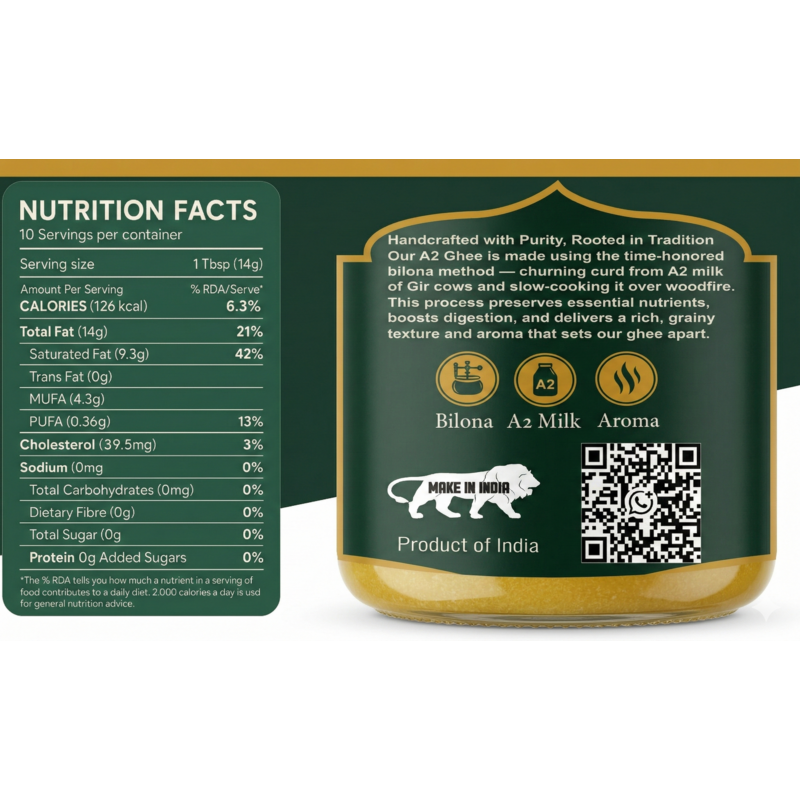
For daily rotis we use our Desi Cow A2 Ghee. A 1 litre jar at the stove is a good arrangement for a family that eats phulkas every night.