On Ashtami and Navami, homes across North India prepare the same plate for kanya pujan: puri, kala chana and a spoonful of sooji halwa. The halwa is the part that children always ask for more of. Traditional prasad halwa follows a simple, easy-to-remember ratio: one part sooji, one part ghee, one part sugar, and three parts water. The ratio is simple. The roasting is where the skill lies.
Ingredients
- ½ cup sooji (fine semolina)
- ½ cup ghee
- ½ cup sugar
- 1½ cups water
- ¼ tsp cardamom powder
- 1 tbsp raisins
- 1 tbsp chopped almonds or cashews
- A pinch of saffron (optional)
Method
- Make the syrup. In a saucepan, heat the water and sugar until the sugar dissolves completely and the liquid is hot. Add saffron if using. Keep it simmering.
- Heat ghee. Heat the ghee in a heavy kadai on low to medium heat.
- Roast the sooji. Add the sooji and stir continuously. At first it will be bubbly and pale. Keep stirring for 8 to 10 minutes on low heat until it turns a golden brown, smells strongly aromatic, and the ghee begins to separate from the sooji.
- Add nuts and raisins. Add them for the last minute of roasting.
- Add the hot syrup. Stand back and pour the hot syrup in slowly while stirring. It will splutter vigorously.
- Cook until thick. Keep stirring on medium heat. The sooji absorbs the syrup quickly. Within 2 to 3 minutes the halwa thickens, and then begins to leave the sides of the pan, with ghee glistening at the edges.
- Finish. Add cardamom powder, stir, and turn off the heat.
Getting the texture right
Soft and flowing: use the full 1½ cups of water, and stop cooking just as it leaves the sides of the pan. This is the style many families prefer for prasad.
Firmer, cut-able halwa: reduce the water to 1¼ cups and cook a minute longer.
The roasting is the recipe
Under-roasted sooji gives a pale, pasty halwa that tastes raw. Properly roasted sooji is golden, fragrant and cooks into separate, soft grains. Low heat, patience and constant stirring are the whole technique. Your nose will tell you when it is ready.
Why the syrup must be hot
Cold liquid on hot roasted sooji causes lumps and uneven cooking. Hot syrup is absorbed evenly.
About the ghee
Equal parts ghee and sooji may look like a lot, but it is the traditional ratio for prasad halwa and gives the soft, glossy, rich texture people remember. Some ghee separates and glistens at the edges when the halwa is done; that is exactly how it should look. With less ghee, the halwa is drier and less fragrant.
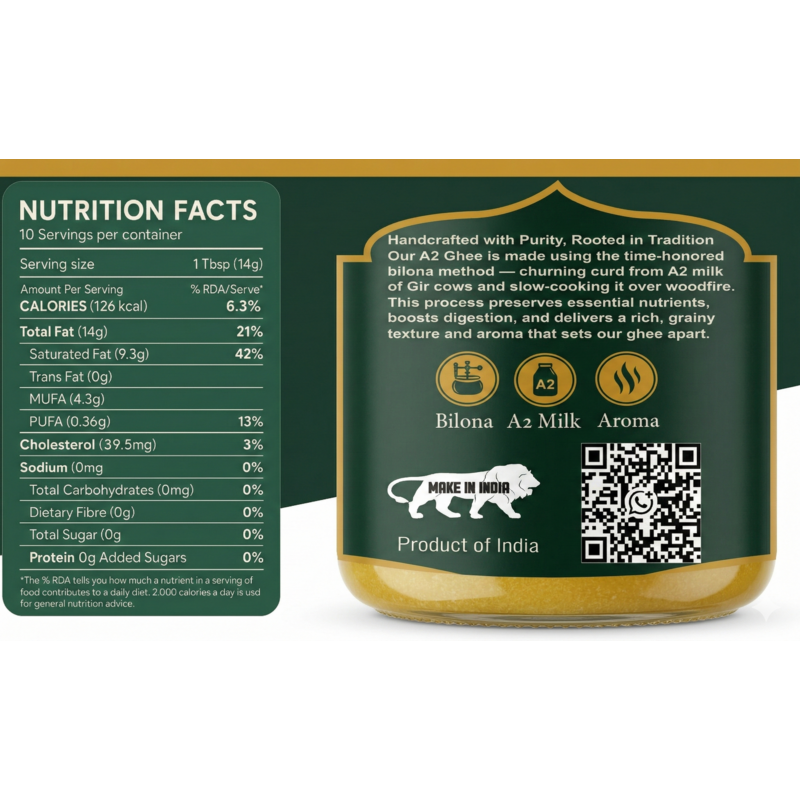
Because ghee is such a large part of this dish, and because it is being offered as prasad, many families choose their best cow ghee for it.
For kanya pujan
Serve warm halwa with puris fried in ghee and dry kala chana cooked with cumin, coriander and a little amchur. The three together are the traditional prasad plate.
For prasad, many families keep a jar of A2 Gir Cow Ghee aside just for puja cooking, opened only with a clean spoon.