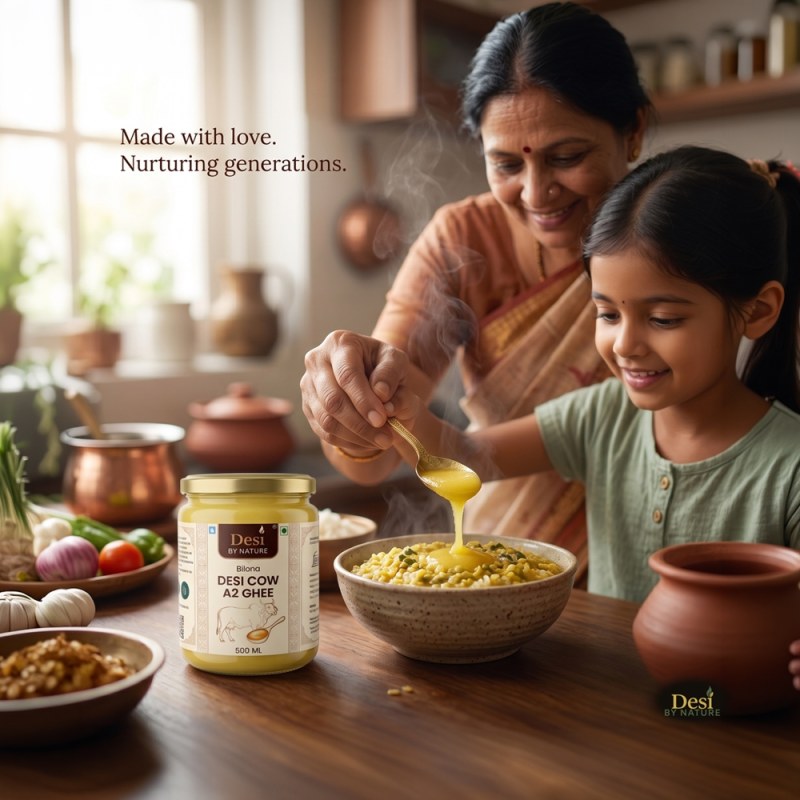
Across India, the weeks after childbirth come with their own kitchen. Grandmothers and aunts arrive with steel boxes of ladoos, and meals turn warm, rich and heavy with ghee, jaggery, dry fruit and seeds. The names change from region to region: panjiri and gond ke ladoo in Punjab, dink laddu in Maharashtra, katlu in Gujarat, and many more. The idea is broadly the same everywhere.
A note before anything else: recovery after childbirth is very individual. Please follow the advice of your doctor, especially after a caesarean, with gestational diabetes or any other condition. These are traditional foods, described as such, not treatments.
Why these foods are traditional
Traditionally, postpartum foods are meant to be warming, energy-dense and nourishing for a mother who is recovering and often breastfeeding. They are packed with ghee, whole wheat, jaggery, nuts, seeds and spices like ajwain, dry ginger and fenugreek. A new mother's energy needs are real, especially while breastfeeding, and these foods deliver a lot of energy in a small portion.
You will hear many specific claims about these foods, for milk supply, back strength or healing. Some ingredients such as fenugreek have long traditional use as galactagogues, but the scientific evidence is limited and mixed. We will describe the foods, not promise results.
Gond ke ladoo
Edible gum (gond) is fried in ghee until it puffs, crushed, and mixed with whole wheat flour roasted in ghee, jaggery or sugar, dry fruit and cardamom, then shaped into ladoos. They are rich and crunchy. A common recipe uses around a cup of ghee for a batch made from a cup of atta, so one ladoo a day is the traditional serving, not a handful.
Panjiri
Whole wheat flour roasted slowly in ghee until golden, mixed with powdered sugar or jaggery, fried and crushed makhana, gond, dry fruit, melon seeds, and spices like dry ginger and ajwain. Eaten a spoonful at a time, often with warm milk. Panjiri is also made for Janmashtami and through winter.
Dink laddu
The Maharashtrian version: gond fried in ghee, dry coconut, dates, dry fruit, poppy seeds and jaggery. Often made in large batches before the baby arrives.
Methi ladoo
Fenugreek seeds are soaked in milk or ghee to soften their bitterness, then combined with wheat flour roasted in ghee, jaggery and dry fruit. They are strongly flavoured, and many women find them an acquired taste.
Ajwain paratha and ajwain water
Simple parathas with carom seeds, cooked in ghee, are a common everyday postpartum food, as is warm ajwain water. Ajwain is traditionally used for digestion.
Suji or atta halwa and sheera
Soft halwa made with ghee is often among the first foods given after delivery, being easy to eat and warming.
Moong dal khichdi with ghee
Light, soft and easy to digest, with a spoon of ghee on top. It is often the everyday meal in the first days. See our moong dal khichdi.
Sensible cautions
- Portion sizes. These foods are very rich. The tradition is a ladoo or a spoonful a day, not unlimited amounts.
- Gestational diabetes and blood sugar. Many recipes are high in jaggery or sugar. Speak to your doctor about adapting them.
- Caesarean recovery. Some doctors advise lighter foods in the early days.
- Weight. The body needs energy while breastfeeding, but daily ladoos on top of full meals add up. Balance matters.
- Allergies. Nuts, seeds and gond can cause reactions in some people, and in some cases in the breastfed baby. Introduce gradually.
- Freshness. Make batches small enough to finish while fresh, and store them airtight.
Choosing ghee for these foods
Because ghee is the main ingredient in many of these foods by weight, its quality and freshness matter. Families traditionally choose their best cow ghee for them. Check the ingredient list, FSSAI number and packing date, and choose a brand that can share a lab report.
For a batch of ladoos or panjiri, a 1 litre jar of A2 Gir Cow Ghee is a common choice, with every batch tested by a NABL-accredited lab.