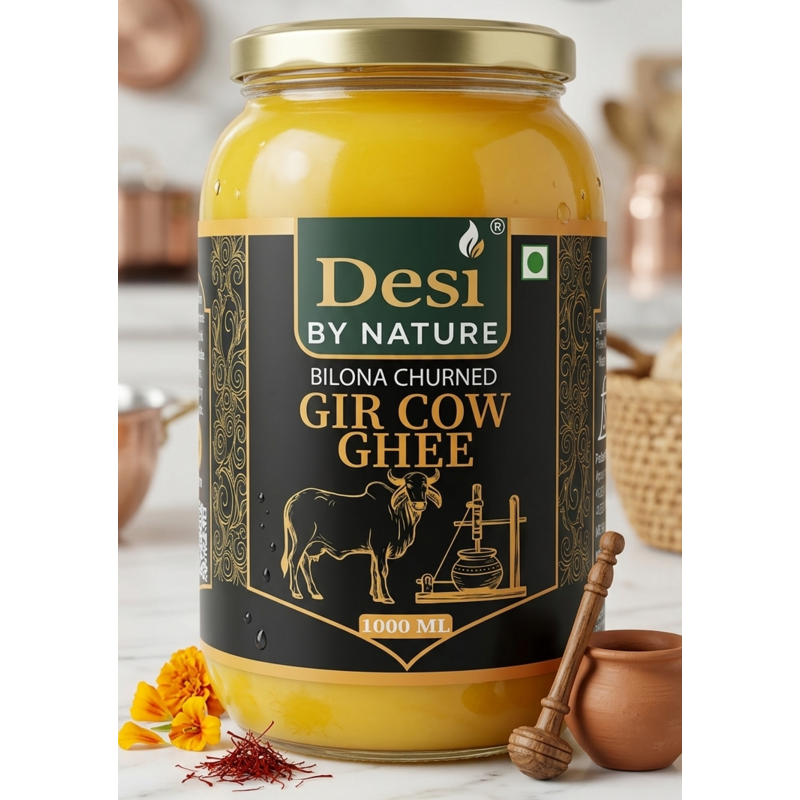
Ghee is made from butter. That simple fact leads a lot of people to treat them as the same thing in different forms, one solid and one pourable. In the kitchen, and on a nutrition label, the two are more different than that. Here is what actually changes when butter becomes ghee.
What butter is
Butter is roughly 80 to 82 percent milk fat. Most of the rest is water, around 15 to 17 percent, plus a small amount of milk solids: proteins such as casein and whey, and milk sugar (lactose). Salted butter also contains salt.
Traditional Indian white butter, makkhan, is similar in make-up, usually unsalted and often a little higher in moisture.
What happens when butter becomes ghee
Butter is heated slowly. The water boils away. The milk solids separate, sink and brown. The clear fat is strained off, leaving the solids behind. What you are left with is roughly 99.5 percent fat.
Clarified butter, as it is called in Western kitchens, follows a similar process but is usually stopped before the solids brown. Ghee is taken further, and that browning step is where much of its nutty flavour comes from.
The practical differences
Flavour. Butter tastes sweet, creamy and fresh. Ghee tastes nutty, toasty and deeper, because of the browned milk solids it was cooked with. Bilona ghee adds a slightly tangy, cultured note on top. They are not substitutes in every dish: ghee on toast is lovely, but it will not give you the fresh dairy taste that butter does.
Heat. The milk solids in butter burn at relatively low temperatures, which is why butter goes brown and then black in a hot pan. Ghee has had those solids removed, so it can take much more heat before smoking. We covered the numbers in what the smoke point of ghee means.
Shelf life. Butter contains water and milk solids, which is exactly what microbes need. It has to be refrigerated and goes rancid relatively quickly. Ghee has almost no water, so it keeps for months in a cupboard when stored with a clean, dry spoon.
Texture. Butter is firm when cold and spreads when soft. Ghee is liquid in warm weather and sets soft or grainy in cooler weather. It never has butter's firm, sliceable texture.
Lactose and milk protein. Because the milk solids are removed, ghee contains only trace amounts of lactose and milk protein, far less than butter. Some people who find butter uncomfortable are fine with ghee. That said, trace amounts are not zero, and anyone with a diagnosed milk allergy should follow their doctor's advice rather than a blog's.
Calories. Ghee is more concentrated. A tablespoon of ghee has roughly 120 to 130 kcal. A tablespoon of butter has somewhat less, around 100, because a fifth of it is water. Per gram of fat, they are the same.
Swapping one for the other
Butter to ghee: Use about three-quarters the amount, since ghee has no water. Expect a nuttier flavour. Works well in Indian sweets, sautéing, roasting and many cakes. See the note on baking below.
Ghee to butter: Use slightly more butter, and lower the heat. Avoid swapping in high-heat cooking such as tempering or ghee roast dosa, where butter will burn.
Baking: Butter's water creates steam, which helps some pastries and cookies rise and flake. Ghee gives denser, more tender results. It shines in Indian bakes such as nankhatai, but will change a croissant.
Which is better?
Neither, in absolute terms. They are different ingredients. Butter is better where you want fresh dairy flavour and a cold, firm fat. Ghee is better for Indian cooking, for high heat, for flavour carried by spices, and for keeping in the cupboard.
If you are stocking one for everyday Indian cooking, ghee is the more versatile. Our Desi Cow A2 Ghee is made from churned makkhan by the traditional bilona method.