India has never had a single cooking fat. A Bengali kitchen smells of mustard oil, a Kerala kitchen of coconut oil, a Punjabi or Gujarati kitchen of ghee, and a Tamil kitchen of sesame oil. Each tradition developed around what grew locally, and each fat suits certain dishes remarkably well. This is a kitchen comparison of three of the most loved, rather than a nutrition debate.
Ghee
What it is: milk fat, made by cooking butter until its water evaporates and milk solids brown, then straining.
Flavour: nutty, rich and rounded. Bilona ghee has an added cultured tang. Ghee carries the aroma of whole spices very well.
Heat: handles high temperatures comfortably, since milk solids have been removed. Good for tempering, sautéing and frying.
Best for: dal tadka, khichdi, rotis and parathas, rice dishes, halwa and most mithai, finishing dishes, and sweets for festivals and prasad.
Traditional regions: across North and West India, and in South Indian temple cooking and sweets.
Keeps: months in a cupboard, if stored dry and sealed.
Coconut oil
What it is: fat pressed from coconut. Virgin or cold-pressed coconut oil tastes and smells of coconut. Refined coconut oil is neutral.
Flavour: sweet and distinctly coconutty, in the virgin form.
Heat: virgin coconut oil smokes at lower temperatures than ghee. Refined coconut oil tolerates more heat. Traditional Kerala frying uses coconut oil very successfully.
Best for: Kerala and coastal cooking such as avial, thoran, fish curries and banana chips, and South Indian tempering where coconut is already part of the dish.
Traditional regions: Kerala, coastal Karnataka, parts of Tamil Nadu and Goa.
Keeps: well. Solidifies below about 24°C, which is normal.
Mustard oil
What it is: oil pressed from mustard seeds. Kachi ghani, or cold-pressed, mustard oil is the traditional form.
Flavour: sharp, pungent and nose-tingling when raw. Traditionally it is heated until it just smokes, then cooled slightly before use, which mellows the pungency.
Heat: good for frying once heated through.
Best for: Bengali fish and vegetable dishes, Punjabi and Kashmiri pickles, sarson ka saag, Bihari cooking, and mustard-heavy preparations like jhaal.
Traditional regions: West Bengal, Odisha, Bihar, Assam, Punjab and Kashmir.
Keeps: very well, which is one reason it is used in pickling.
How they compare in the kitchen
- Neutral dishes where fat should add richness: ghee.
- Dishes that already use coconut: coconut oil.
- Dishes that want sharpness and pungency: mustard oil.
- Sweets and mithai: ghee, almost always.
- Pickles: mustard oil or sesame oil.
- Deep frying on a budget: refined oils are cheapest; coconut oil in Kerala-style cooking, ghee for sweets.
On health, briefly
You will find passionate online claims for and against all three. The balanced view is that each has a different fat profile. Ghee and coconut oil are high in saturated fat, while mustard oil is mostly unsaturated. Indian dietary guidance generally recommends using a mix of fats rather than just one, and keeping the total amount moderate. That happens to fit how many Indian kitchens already cook: ghee for some things, a regional oil for others.
We covered refined oils separately in ghee vs refined oil.
The case for keeping more than one
The best Indian cooks we know do not choose one fat and use it for everything. A bottle of cold-pressed mustard or coconut oil for the dishes that need it, and a jar of good ghee for the dishes where ghee is the flavour, covers almost everything.
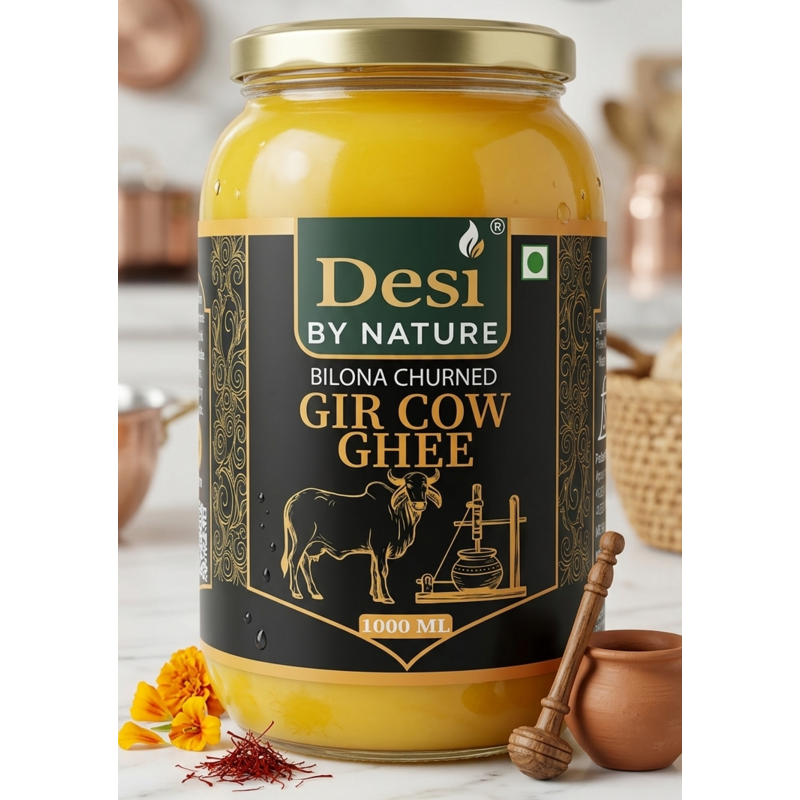
For the ghee jar, our Desi Cow A2 Ghee is made by the traditional bilona method and suits everyday cooking well.