Wine people and coffee people taste side by side as a matter of habit. Almost nobody does it with ghee, even though most families use it every day and pay very different prices for it. Tasting two or three ghees together is the fastest way to learn what you prefer, and it often surprises people. It takes about fifteen minutes and needs nothing special.
What you need
- Two or three ghees you want to compare, including the one you use now
- A small steel katori or ramekin for each
- Small steel spoons, one per ghee
- A small pan
- Plain steamed rice, or a few pieces of plain roti
- Water to drink between tastes
- A piece of paper, and labels or numbers for each ghee
Set it up blind if you can
Ask someone else to put a spoon of each ghee into numbered bowls without telling you which is which. Price and packaging change how we taste things more than we like to admit. A blind tasting is a little more fun and a lot more honest.
Step 1: Look at it at room temperature
Note the colour and texture. Is it pale or deep yellow? Grainy, smooth or liquid? This does not tell you which is better, since colour and texture change with season and breed, but it helps you tell them apart and is worth writing down.
Step 2: Smell it cold
Bring each bowl close and breathe in. Cold ghee does not smell of much, but some will already have a noticeable aroma. Note anything unpleasant: sharp, sour, waxy or stale.
Step 3: Warm a little and smell again
This is the most revealing step. Warm half a teaspoon of each ghee in a clean pan, one at a time, just until it melts and turns fragrant. Do not let it smoke. Pour it into a clean spoon and smell straight away.
Good ghee opens up as it warms. You may notice:
- Nutty, toasty notes, from the browned milk solids during cooking.
- A slightly tangy, buttery, cultured note, typical of ghee made from curd by the bilona method.
- Caramel or sweet hints in ghee cooked a little further.
Flat ghee smells of warm fat and very little else. Stale ghee smells like old crayons or paint. Ghee with added vegetable oil often has a faint oily note, or simply no character at all.
Step 4: Taste it plain
Taste a small amount of each melted ghee from a spoon. Let it coat your tongue. Notice the flavour, how long it lingers, and whether it feels waxy or clean in your mouth. Sip water between tastes.
Step 5: Taste it with rice or roti
This is how you will actually eat it. Put a little of each warm ghee on a spoon of plain rice or a piece of plain roti. The differences you noticed in the spoon either become obvious here or disappear. Many people find that a ghee that seemed intense on its own tastes wonderful with rice.
Step 6: Write it down, then reveal
Before revealing which is which, rank them and note a word or two for each: "nutty", "flat", "strong", "sour". Then compare with the labels and the prices.
What people usually discover
- The difference between cream-separated and curd-churned ghee is obvious when warm, much less when cold.
- Colour has almost nothing to do with flavour.
- The ghee they have used for years is sometimes a pleasant surprise, and sometimes not.
- More expensive is not always preferred. Taste is personal.
What a tasting cannot tell you
Taste and smell are good at finding stale ghee and bland ghee. They are not a purity test. Skilful adulteration can pass a tasting. If purity is your concern, combine your tasting with a look at the label and, where possible, a batch lab report, as described in how to read a ghee lab report.
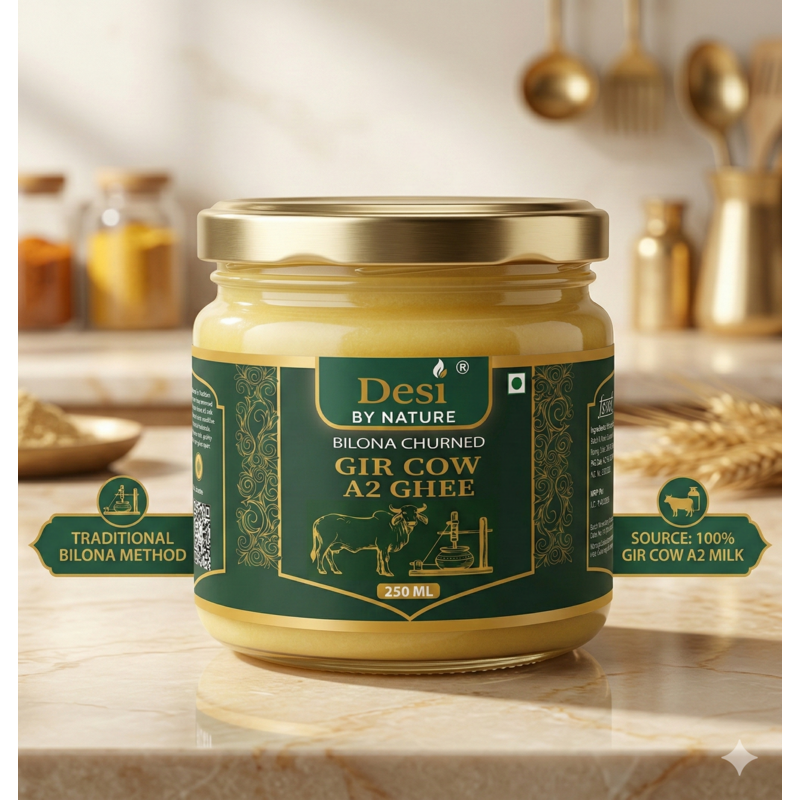
If you would like to run this at home with our ghee, a 250 ml jar of A2 Gir Cow Ghee and a 500 ml jar of Desi Cow A2 Ghee make a good pair to taste against whatever you use now.