For nine nights of Navratri, many Indian kitchens change their rules. Wheat, rice and most lentils are set aside. Onion and garlic disappear. Regular salt is replaced with sendha namak. What remains is a special pantry of flours, tubers, nuts and dairy, and ghee holds it all together. Practices differ from family to family and region to region, so follow your own family's customs where they differ from what is written here.
The vrat pantry
Flours and grains that are commonly allowed:
- Kuttu (buckwheat) flour: for puris and pakoras.
- Singhare ka atta (water chestnut flour): for halwa, pakoras and rotis.
- Rajgira (amaranth) flour: for rotis, parathas and ladoos.
- Samak or sama rice (barnyard millet): for khichdi and pulao.
- Sabudana (tapioca pearls): for khichdi, vadas and kheer.
Other staples: potatoes, sweet potatoes, arbi, raw banana, pumpkin, peanuts, makhana, dry fruits, milk, curd, paneer, cucumber, lemon, green chillies, ginger, cumin, black pepper and sendha namak.
Usually avoided: wheat, rice, regular lentils, onion, garlic, and in many homes turmeric, hing and certain spices.
Why ghee matters so much during vrat
Fasting flours such as kuttu and singhara have no gluten and can taste earthy or slightly bitter on their own. Ghee makes them palatable, helps them bind, and gives fried vrat food its crispness. It is also considered pure (sattvic) and appropriate for fasting in many traditions, which is why ghee rather than oil is the default in so many homes.
Because fasting meals are often eaten once or twice a day, they tend to be richer. Ghee makes a small meal more satisfying.
A simple nine-day menu idea
- Day 1: Sabudana khichdi with peanuts, cooked in ghee; curd.
- Day 2: Kuttu puri with aloo sabzi (with sendha namak and cumin).
- Day 3: Sama rice khichdi with ghee; cucumber raita.
- Day 4: Singhare ka halwa; roasted makhana.
- Day 5: Rajgira paratha with lauki or pumpkin sabzi.
- Day 6: Sabudana vada; green chutney made without onion or garlic.
- Day 7: Arbi or sweet potato chaat with ghee-roasted cumin.
- Day 8 (Ashtami): Halwa, kala chana and puri for kanya pujan, following your family's custom.
- Day 9: Makhana kheer; paneer tikka cooked in ghee.
Cooking tips for vrat food
Frying kuttu puris. Kuttu dough has no gluten and cracks easily. Bind it with mashed boiled potato, knead just before frying, and fry in hot ghee so the puris puff quickly and do not soak up fat.
Sabudana. Soak according to the pearl size and drain very well, so it cooks up separate rather than sticky. A generous tempering of ghee and cumin keeps it from clumping.
Halwa from singhara flour. Roast the flour slowly in ghee until it darkens a shade and smells nutty. Undercooked singhara flour tastes raw.
Sendha namak. It tastes slightly less salty than table salt for the same volume. Adjust gradually.
Plan portions of ghee. Vrat cooking uses more ghee than usual. A 1 litre jar can run low halfway through the festival for a large family.
Recipes coming this week
Over the next few days we will publish detailed recipes for kuttu ki puri, singhare ka halwa, sabudana khichdi and Ashtami sooji halwa, each with the steps that make them work.
A note on health during fasting
If you are pregnant, diabetic, elderly or managing a medical condition, speak with your doctor about how to fast safely. Many families adapt fasts for health reasons, and that is entirely in keeping with the spirit of the festival.
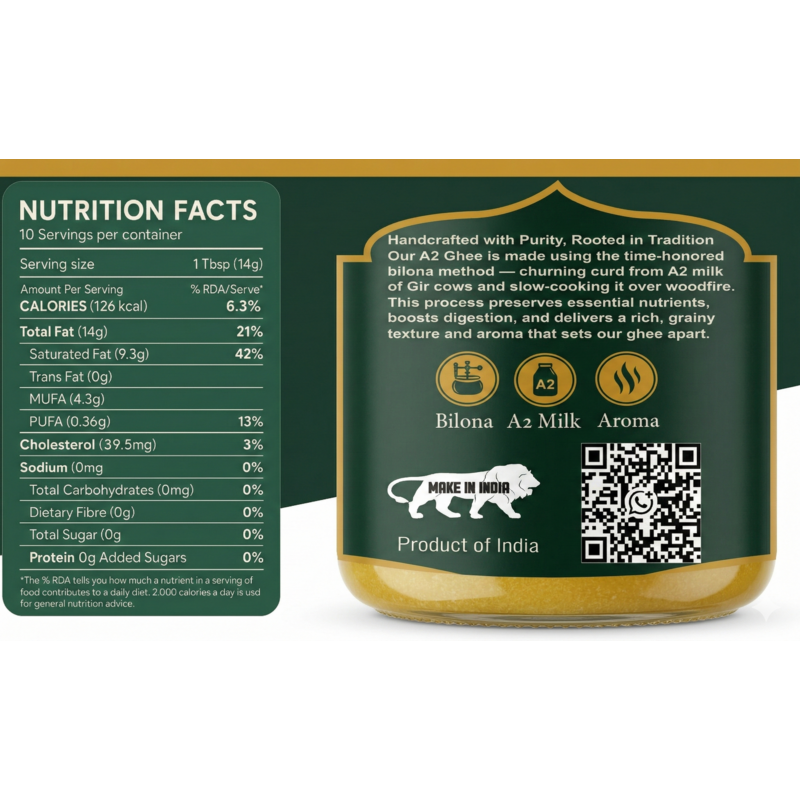
For Navratri cooking, many families use cow ghee. Our Desi Cow A2 Ghee in 1 litre or a 2.5 litre dolchi suits the extra cooking of these nine days, and our A2 Gir Cow Ghee is a good choice for prasad and diyas.