A surprising number of people tell us they cannot drink milk but have no problem with ghee. That is not a coincidence. Most of what causes trouble in milk is removed when butter is turned into ghee. "Most" is not "all", though, and the difference between lactose intolerance and a milk allergy matters a great deal here.
This is general information. If you have been diagnosed with a food allergy or intolerance, please follow your doctor's advice.
Two different problems
Lactose intolerance is a digestive issue. Lactose is the natural sugar in milk. People who produce too little of the enzyme lactase cannot digest it well, and undigested lactose causes bloating, gas and discomfort. It is uncomfortable, not dangerous, and it depends on dose: many people can manage small amounts. Reduced lactase production in adulthood is very common in many parts of the world, including India.
Milk allergy is an immune reaction to milk proteins, mainly casein and whey. Reactions range from hives and stomach upset to, in rare cases, severe and dangerous reactions. Even very small amounts of protein can trigger it in sensitive people.
What happens to lactose when ghee is made
Lactose dissolves in water, not fat. When milk becomes curd, bacteria ferment some of the lactose. When curd is churned, most of the remaining lactose stays in the buttermilk. When butter is cooked into ghee, the water boils off and the remaining milk solids, which contain what little lactose is left, are browned and strained out.
The result is that genuine ghee contains only trace amounts of lactose. For most people with lactose intolerance, ordinary amounts of ghee cause no symptoms at all.
Bilona ghee has an extra step in its favour: the curd fermentation removes some lactose before churning even begins. We described the full process in how bilona ghee is made.
What happens to milk protein
Milk proteins, too, stay mostly in the buttermilk and in the browned solids that are strained out. That is why a nutrition label for ghee shows 0 g protein. See the numbers in calories in a spoon of ghee.
However, "0 g" on a label is a rounded figure. Trace amounts of protein can remain, and how much varies with how thoroughly the ghee was cooked and strained.
So can you eat ghee?
If you are lactose intolerant: most people can eat ghee comfortably. If you are very sensitive, start with a small amount and see how you feel. Ghee is often one of the easier dairy foods to include.
If you have a diagnosed milk allergy: do not assume ghee is safe. Trace proteins can be enough to cause a reaction in sensitive people. Speak to your doctor or allergist before trying it, and follow their guidance.
For babies and children with suspected dairy allergy: always check with your paediatrician first.
Butter, ghee and other dairy compared
- Milk: high in lactose and protein.
- Curd: less lactose than milk, because bacteria ferment some of it. Often better tolerated.
- Paneer: relatively low lactose, but high protein.
- Butter: low lactose, but contains some milk solids and protein.
- Ghee: trace lactose and protein. Usually the best tolerated for lactose intolerance.
A note on "lactose-free" claims
Some brands label ghee "lactose-free". In practical terms it is very low in lactose, but labelling rules and testing thresholds vary, and a trace is still a trace. For intolerance, it is a reasonable description. For allergy, treat any dairy product with caution regardless of the label.
Why purity matters here
Ghee that is not fully cooked or strained can retain more milk solids, and adulterated or blended products can contain other ingredients. If you rely on ghee being low in lactose, a well-made, single-ingredient ghee from a brand that tests its batches is the sensible choice.
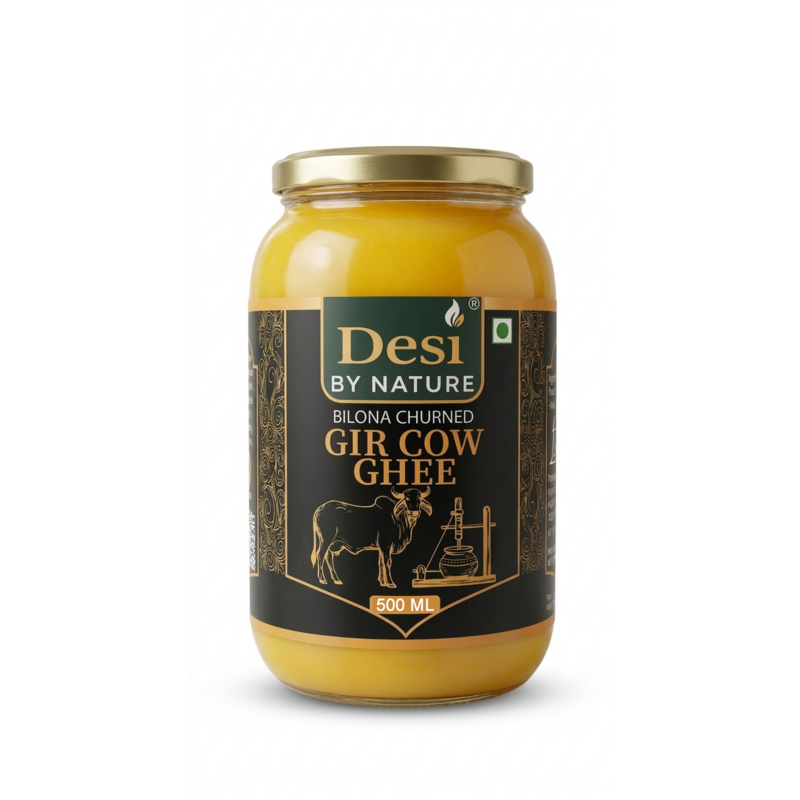
Our A2 Gir Cow Ghee and Desi Cow A2 Ghee are both bilona ghee, made from cultured curd and strained clean, with a single ingredient.