Older generations in India remember the yellow tins. Vanaspati, and in particular one brand whose name became the everyday word for it, sat in almost every kitchen for decades. It was sold as an affordable alternative to ghee, used for frying, sweets and parathas, and in many homes it was simply called "ghee". It is not ghee, and the difference matters both in cooking and in buying genuine ghee today.
What vanaspati is
Vanaspati is hydrogenated vegetable fat. It is made from vegetable oils, such as palm, soybean, cottonseed or rice bran oil, through a process called hydrogenation. Hydrogen is bubbled through heated oil in the presence of a catalyst, which changes the structure of the fatty acids so the liquid oil becomes semi-solid at room temperature.
The result is a fat that looks and behaves somewhat like ghee: it sets, it can be granular, it keeps well and it fries well. It contains no milk fat at all.
How it differs from ghee
- Source: ghee is milk fat. Vanaspati is plant oil.
- Process: ghee is butter cooked until its water evaporates. Vanaspati is chemically modified oil.
- Flavour: ghee is nutty and aromatic. Vanaspati is largely neutral, though some products added flavour to imitate ghee.
- Fatty acids: ghee contains short-chain fatty acids characteristic of milk fat, which is part of how laboratories identify it. Vanaspati does not.
- Price: vanaspati is far cheaper.
The trans fat problem
Traditional partial hydrogenation produces trans fats. Industrially produced trans fats are widely regarded by health authorities, including the World Health Organization, as harmful to heart health, with no safe level of intake recommended. For many years, vanaspati was one of the largest sources of trans fat in Indian diets.
Regulators have acted on this. FSSAI progressively tightened limits and now restricts trans fat in oils and fats, including vanaspati, to not more than 2 percent by weight. Manufacturers have changed processes to comply, for example through different hydrogenation methods and blending with palm fractions. Even so, vanaspati and ghee remain entirely different products.
Vanaspati as a ghee adulterant
Because it looks similar and costs much less, vanaspati has long been one of the most common adulterants mixed into ghee. This is why Indian regulations historically required a small amount of sesame oil in vanaspati: the sesame acts as a marker that shows up in the Baudouin test used on ghee. We explained how that works in the Baudouin test.
Laboratories also use measures such as the RM value and BR reading to check whether a sample behaves like genuine milk fat, as described in FSSAI standards for ghee.
How to tell them apart
- Read the label. Vanaspati must be labelled as vanaspati or hydrogenated vegetable fat, and cannot legally be called ghee.
- Check the ingredients. Ghee has one: milk fat.
- Smell it warm. Genuine ghee has a distinct dairy aroma.
- Be wary of loose "ghee" of unknown origin sold cheaply.
- For certainty, rely on a batch-linked lab report, since home tests have limits. See home tests for ghee purity.
Is vanaspati still used?
Yes, especially by commercial kitchens, sweet shops and street food vendors, because of its price and stability. Some sweets sold as "made in pure ghee" are made in vanaspati or a blend. If it matters to you, ask, and at festival time consider making sweets at home.
The short version
Vanaspati is a vegetable fat engineered to act like ghee and sold for much less. It is not ghee, it does not taste like ghee, and when it turns up inside a jar labelled ghee, that is adulteration.
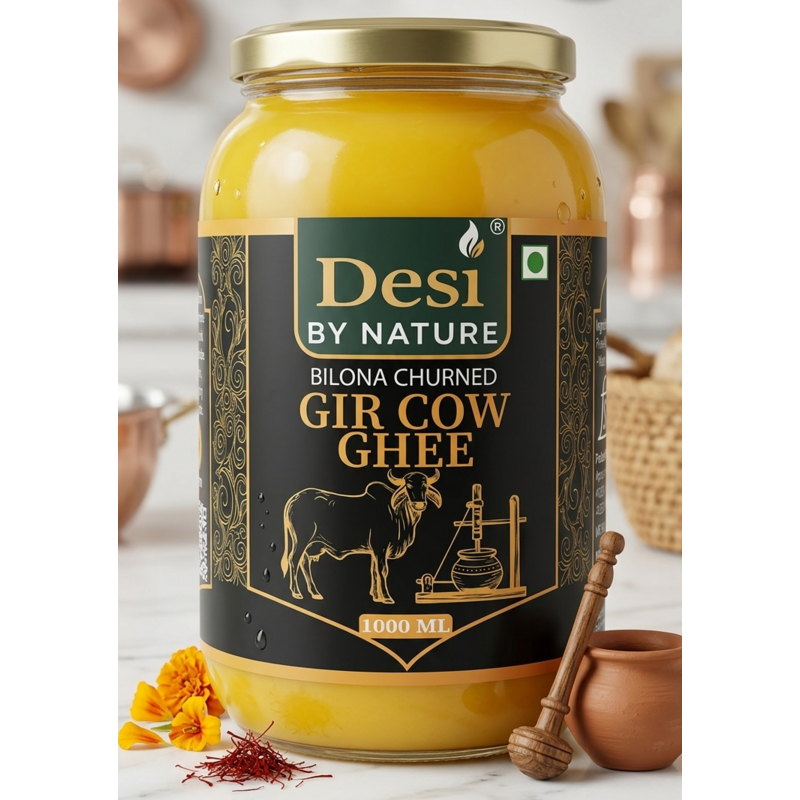
Every batch of our A2 Gir Cow Ghee is tested by a NABL-accredited lab, including for markers of vegetable fats.