Before ghee came in jars, it came from the steel box of malai in the fridge. In homes all over India, the thick cream that forms on boiled milk is skimmed off every day and saved until there is enough to make butter and then ghee. It is one of the most satisfying things you can do in a kitchen, and your whole home will smell wonderful for an afternoon. Here is the method, including the cultured step that gives homemade ghee its best flavour.
What you need
- Malai from full-cream milk, collected over 1 to 3 weeks (about 2 cups of malai will give a small bowl of ghee)
- 1 to 2 tbsp curd
- Ice-cold water
- A heavy-bottomed kadai or pan
- A fine steel strainer and a clean muslin cloth
- A clean, completely dry glass or steel jar
Step 1: Collect the malai properly
Boil full-cream milk, let it cool completely, and refrigerate it. A thick layer of malai forms on top. Skim it into a clean steel or glass box. Keep the box in the fridge, and add fresh malai every day or two.
Two habits keep the malai fresh while you collect: always use a clean spoon, and stir the new malai into the old each time. Some families add a spoon of curd to the box from the start, which keeps it from going off and begins the culturing.
Step 2: Culture the malai
Once you have enough, take the box out of the fridge and let the malai come to room temperature. If you have not already, stir in 1 to 2 tablespoons of curd. Cover and leave it at room temperature for 8 to 12 hours, until it smells lightly sour and has set a little.
This step is optional, but it makes a big difference. Cultured cream gives a ghee with a fuller, tangier aroma, closer to bilona ghee. Uncultured malai gives a milder, sweeter ghee.
Step 3: Churn into makkhan
Chill the cultured malai for an hour; butter separates more easily when cold. Put it in a large bowl or a mixer jar and add about half a cup of ice-cold water.
- With a mixer: pulse for a few seconds at a time. The mixture will go thick, then suddenly split into white butter and thin buttermilk.
- By hand: churn with a wooden madhani or whisk vigorously. This takes 10 to 15 minutes and is how it has been done for centuries.
Add another splash of ice-cold water once the butter starts to separate; it helps the butter clump together.
Step 4: Wash the butter
Gather the butter with your hands into a ball and lift it out. Save the buttermilk for kadhi or chaas.
Put the butter in a bowl of cold water and press and knead it gently. The water turns cloudy. Change it and repeat two or three times until the water stays almost clear. This removes trapped buttermilk, which would otherwise burn during cooking and give the ghee a sour note.
Step 5: Cook the butter into ghee
- Put the butter in a heavy-bottomed kadai on medium heat until it melts.
- Lower the heat. It will foam and bubble loudly as the water boils away. Stir occasionally.
- After 15 to 25 minutes, depending on quantity, the bubbling becomes quieter, the foam settles, and the liquid turns clear and golden.
- Watch the milk solids at the bottom. They will begin to turn light brown, and the smell will change from buttery to nutty. When the solids are golden brown and the ghee is clear, turn off the heat.
- Optional: drop in a few curry leaves, a betel leaf or a pinch of salt at the very end. Some families swear by it; it is a regional habit.
Take care in the last few minutes. The solids go from golden to burnt quickly.
Step 6: Strain and store
Let the ghee cool for a few minutes so it is still liquid but not scalding. Strain it through a fine strainer lined with muslin into a completely dry jar. Leave it uncovered until it cools to room temperature, then close the lid.
Do not throw away the browned solids. Called kharchan or ghee residue, they are delicious with a little sugar or mixed into roti dough.
Common problems
The ghee smells sour: buttermilk was left in the butter, or the malai was kept too long. Wash the butter more thoroughly next time.
The ghee is cloudy and spoils quickly: it was not cooked long enough, so water remains. Cook until the bubbling goes quiet.
It tastes burnt: the heat was too high at the end. Lower heat, more patience.
Very little ghee: this is normal. Malai is only part fat, and butter is only part ghee.
Homemade and bought, side by side
Homemade malai ghee is a real pleasure, and we would encourage anyone who has the time to try it. It is usually made from packet milk from mixed herds, and yields are small. If you want to understand how it compares in cost and kind to bought bilona ghee, see homemade ghee vs bought bilona ghee.
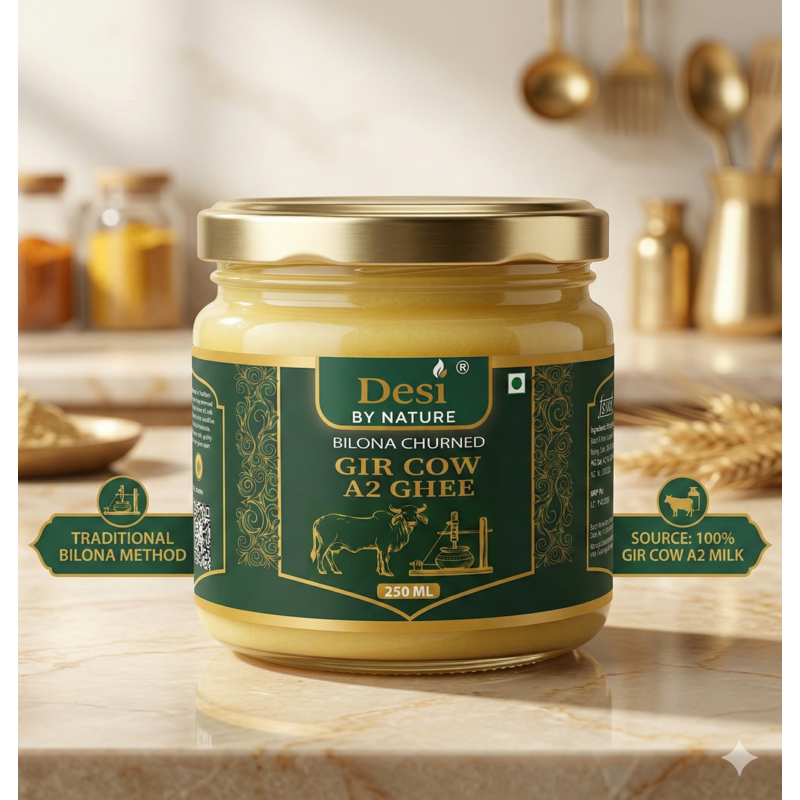
And for the weeks when the malai box is not full yet, there is our Desi Cow A2 Ghee, made by the same principle from whole curd rather than malai.