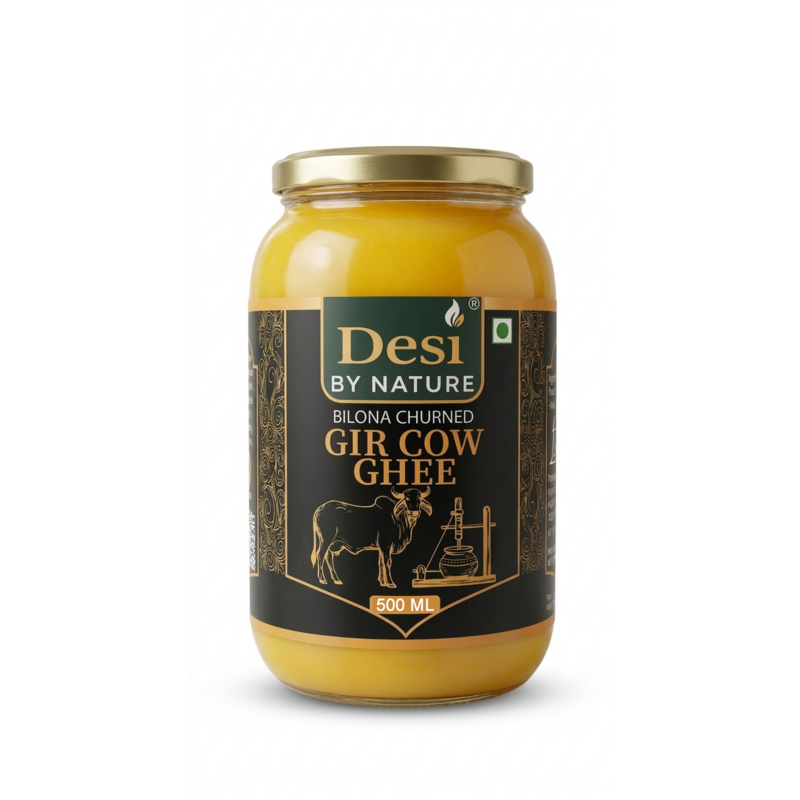
Open a jar of ghee straight from a cool cupboard and smell it, and you will get a faint, pleasant, buttery note. Warm half a spoon in a pan and it is a different thing: nutty, rich, almost caramel, filling the room. That transformation is not your imagination. It is chemistry, and understanding it helps explain why some ghees smell so much better than others.
Why warming releases aroma
Aroma comes from volatile compounds, molecules light enough to evaporate and reach your nose. At room temperature, many of the aroma compounds in ghee are held within the fat and only a small amount escapes. Heat gives those molecules the energy to evaporate, so far more of them reach your nose. The same thing happens with coffee, spices and bread.
That is why the best way to judge a ghee is warm, as we suggested in how to taste-test ghee at home.
Where ghee's aroma comes from
Ghee's smell is built from several sources.
1. Browning of milk solids. When butter is cooked into ghee, the milk proteins and sugars at the bottom of the pan brown. This is the Maillard reaction, the same family of reactions that gives toasted bread, roasted nuts and seared meat their flavour. It produces compounds such as pyrazines and furans, which contribute nutty, roasted and caramel notes. The solids are strained out, but much of the aroma they created dissolves into the fat.
2. Fermentation in bilona ghee. When milk is cultured into curd before churning, the bacteria produce aroma compounds. Diacetyl, which smells distinctly of butter, is one of the best known. Some of these survive into the finished ghee, which is a large part of why curd-churned ghee smells richer and slightly tangier than cream ghee. We covered the process in bilona vs cream-separated ghee.
3. Compounds from milk fat itself. Milk fat naturally contains precursors that form lactones and methyl ketones when heated. These are associated with sweet, creamy, coconut-like and buttery aromas, and they are part of what makes heated dairy fat smell so appealing.
4. Short-chain fatty acids. Milk fat is unusual in containing short-chain fatty acids such as butyric acid. In small amounts they contribute to the characteristic dairy aroma. In large amounts, freed by rancidity, they smell unpleasant.
5. The animal's feed. Compounds from fodder can pass into milk fat, which is one reason ghee from animals grazing on fresh green fodder can smell different from ghee made in a dry season.
Why some ghee smells of almost nothing
- Very light cooking. Ghee taken off the heat before the solids brown has less roasted aroma.
- No fermentation. Cream ghee made from fresh, uncultured cream lacks the cultured notes.
- Age. Aroma compounds slowly escape or break down, especially in a jar that is opened often.
- Adulteration. Vegetable fats dilute ghee's aroma and add none of their own. Some adulterated products add artificial flavour to compensate.
Why the aroma fades
Volatile compounds are, by definition, the ones that escape. Every time a jar is opened, a little of the aroma leaves. Heat and light speed up the loss. Oxidation over months also changes the aroma profile, first dulling it and eventually producing rancid notes. This is why a freshly opened jar smells best, and why buying a size you will finish within a few months matters.
Why the smell matters in cooking
When you pour a hot ghee tadka over dal, the heat releases a burst of ghee aroma together with the aroma of the spices, many of which are also fat-soluble. The ghee acts as a carrier. A flavourful ghee gives you more aroma from less fat, which is a practical reason to prefer it.
Protecting the aroma
- Keep the lid tightly closed.
- Store away from heat and light.
- Use a smaller working jar and keep the bulk sealed.
- Do not store ghee near strongly scented spices, which it can absorb.
The next time you open a jar of our A2 Gir Cow Ghee, warm half a spoon before you cook with it. That smell is the reason bilona ghee exists.