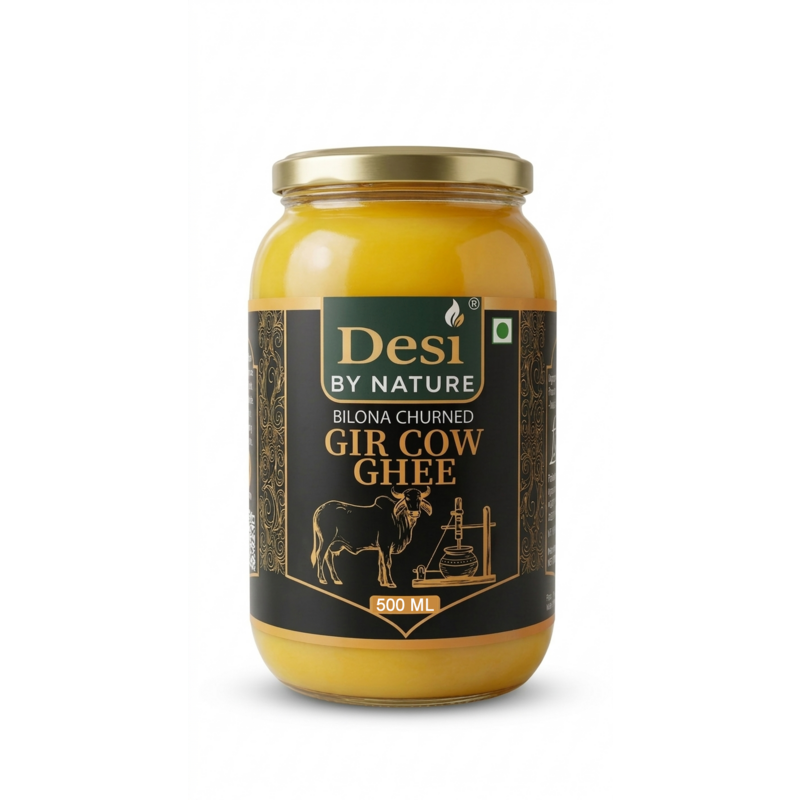
Ghee has a reputation for lasting almost indefinitely, and in some traditions very old ghee was even kept for medicinal use. In an ordinary kitchen, though, ghee does deteriorate. It rarely becomes dangerous in the way spoiled milk does, but it can turn rancid, pick up mould, or simply lose everything that made it worth buying. Here is how to tell.
Two different ways ghee goes wrong
Rancidity is by far the most common. Fat slowly reacts with oxygen over time, speeded up by heat, light and air. It produces sharp, unpleasant smelling compounds. This happens gradually and affects the whole jar.
Microbial spoilage, meaning mould or bacterial growth, is less common, because ghee has very little water. It almost always happens when water or food gets into the jar, usually from a wet or used spoon. It tends to show up in patches.
Signs that ghee has gone rancid
- Smell. The clearest sign. Fresh ghee smells nutty and buttery. Rancid ghee smells sharp, sour, soapy or like old paint, crayons or stale nuts. Warm a little in a pan if you are unsure; rancid notes become obvious.
- Taste. Bitter, sour or unpleasantly sharp, lingering at the back of the throat.
- Colour. Sometimes darker, or an odd translucent look. Colour alone is not reliable, since ghee varies naturally.
- Smoke. Rancid ghee starts smoking at noticeably lower temperatures.
Signs of mould or microbial spoilage
- Fuzzy spots of green, black, white or pink on the surface.
- Patches of discolouration where a spoon was used.
- A sour or cheesy smell in one part of the jar.
- Visible water droplets inside the jar.
If you see mould, discard the jar. Scraping off the top is not enough, since mould can spread below what you see.
Things that look worrying but are normal
- Liquid in summer, solid in winter. Completely normal.
- A grainy, crystalline texture. Normal. See why ghee turns grainy.
- A clear liquid layer on top of set ghee. Happens when a jar partly melts and resets.
- White patches in yellow ghee. Usually different fat fractions setting at different speeds.
- A slightly different colour from your last jar. Seasons and feed. We explained this in why your ghee looks different.
- A small amount of fine sediment at the bottom. Tiny particles of milk solids that passed the strainer. Harmless, though they can shorten shelf life slightly.
What causes ghee to go bad sooner
- Wet spoons. The single biggest cause of spoilage in Indian kitchens.
- Spoons that have touched food, such as dipping the dal spoon into the ghee jar.
- Storing next to the stove or in direct sunlight.
- Loose lids.
- Moisture left in the ghee during making, which is more common with homemade ghee.
- Reusing frying ghee that contains food particles.
Is rancid ghee unsafe?
Mildly rancid ghee is generally not acutely dangerous, but rancid fats are not something you want to eat regularly, and they taste bad enough to ruin food anyway. Mouldy ghee should be thrown away. When in doubt, discard it. A jar of ghee is not worth an upset stomach.
Can old ghee be used for anything?
Ghee that is past its best but not rancid or mouldy, simply less aromatic, is fine for cooking where it is not the main flavour. Some families use old ghee for lighting diyas. Ghee that has clearly turned rancid is best discarded rather than cooked with.
How to make ghee last
- Always use a clean, dry spoon.
- Keep the lid tight.
- Store in a cool, dark cupboard.
- Decant small amounts from large containers.
- Buy a size you will finish within a few months of opening.
For refrigeration questions, see does ghee need refrigeration.
If a jar of our A2 Gir Cow Ghee or Desi Cow A2 Ghee ever smells wrong to you after opening, send us a photo and the batch number on WhatsApp. Our returns policy covers genuine quality problems even on opened jars.