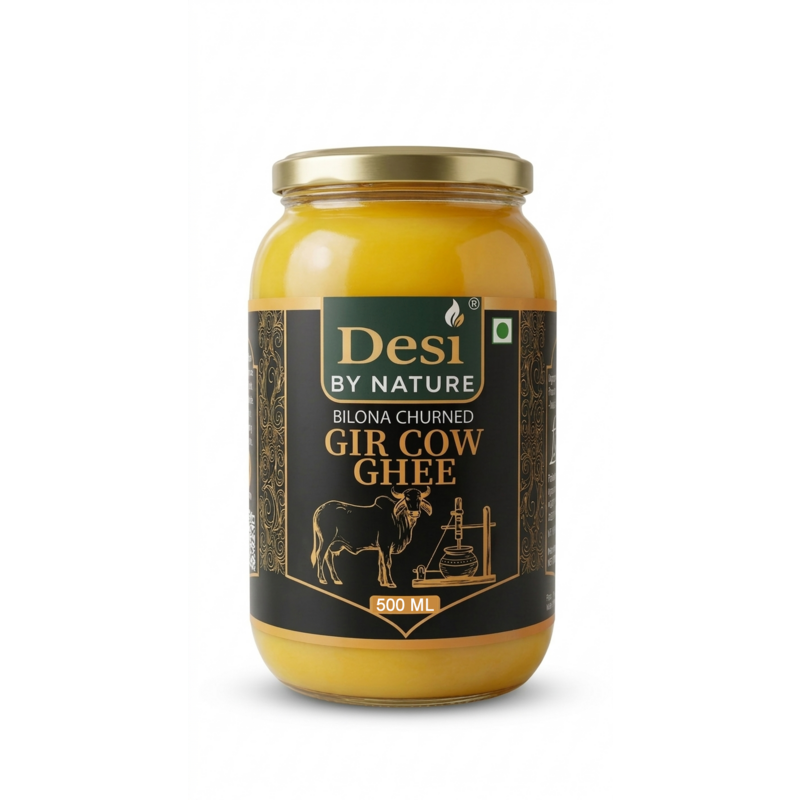
India is the world's largest milk producer, and a large share of that milk comes from buffaloes, not cows. So a lot of the ghee sold in India, especially loose ghee and many regional brands, is buffalo ghee or a blend. Many buyers do not realise this, and are then surprised when a jar of cow ghee looks and tastes quite different. Neither is fake. They are different fats from different animals.
Colour: yellow and white
Cow ghee is yellow, from pale straw to deep gold. Buffalo ghee is white or very pale cream.
The reason is beta-carotene, the yellow pigment in green fodder. Cows pass some of it into their milk fat, which colours the ghee. Buffaloes convert beta-carotene into vitamin A much more efficiently, so very little of the yellow pigment reaches their milk. The result is white fat.
This is why white ghee is not a sign of adulteration, and yellow ghee is not automatically cow ghee. Some buffalo-heavy products are coloured, and pale cow ghee is common in late summer.
Texture
Buffalo milk is richer in fat, often around 6 to 8 percent compared with roughly 3.5 to 5 for indigenous cow milk. Buffalo ghee tends to set firmer and can be very grainy. Cow ghee usually sets softer and melts more readily at room temperature.
Flavour
Buffalo ghee is heavier and richer in mouthfeel, with a milder, sometimes slightly sweet aroma. Cow ghee is lighter and often more aromatic, with a more pronounced nutty flavour, especially when made by the bilona method. Tastes vary between regions and families, and many people prefer the ghee they grew up with.
Yield and price
Because buffalo milk is richer, it takes fewer litres of buffalo milk to make a litre of ghee. That, and the scale of buffalo dairying, generally makes buffalo ghee cheaper. Indigenous cow ghee, and bilona cow ghee in particular, needs much more milk per litre, as we explained in how much milk goes into bilona ghee.
Traditional uses
Buffalo ghee is widely used in sweet shops and commercial cooking, for frying, and in rich mithai where its firmness and body are an advantage. Many North Indian halwais prefer it for certain sweets.
Cow ghee has a special place in religious and ritual use. It is traditionally preferred for havan, diyas and temple offerings. It is also the ghee most families choose for babies, for eating with rice and rotis, and for everyday home cooking where aroma matters.
Which is the "A2" one?
Interestingly, buffalo milk also contains beta-casein of the A2 type. But the term "A2 ghee" in India almost always refers to ghee from indigenous cow breeds. Since ghee contains almost no protein, the A2 label describes the source rather than the contents. We covered that in what A2 actually means.
How to tell which you have
- Read the label. "Cow ghee" should say so. "Ghee" alone may be buffalo, cow or mixed.
- Look at the colour, bearing in mind that season and processing change it.
- Smell it warm. Cow ghee is usually more aromatic.
- Check the price. Indigenous cow bilona ghee priced like buffalo ghee deserves questions.
Which should you buy?
Buy buffalo ghee if you want a rich, firm, economical ghee for frying and sweets. Buy cow ghee if you want aroma, lighter texture and the ghee traditionally used for rituals and for children. Many households keep both.
Both our ghees are made only from cow milk: A2 Gir Cow Ghee from Gir cows, and Desi Cow A2 Ghee from desi indigenous cows.