Many of us reach a point where we start noticing what our parents eat: smaller portions, plates left half-finished, a preference for soft food, a loss of interest in meals that used to be favourites. In Indian homes, one of the oldest responses is a spoon of ghee on their dal and rice. There is some practical sense in that, and also some important cautions.
Please read this first: older adults often live with conditions such as heart disease, high cholesterol, diabetes, kidney disease or digestive problems, and take medicines that affect diet. Before changing an elderly parent's diet, especially adding fats, speak to their doctor or a dietitian.
Why ghee can help some older adults
Smaller appetites. Many elderly people eat less than they need, and unintended weight loss is a real concern in later life. A teaspoon of ghee adds about 45 kcal without adding volume, which can make a small meal more nourishing. For older adults who are underweight or eating poorly, doctors sometimes recommend energy-dense additions for exactly this reason.
Softness and ease of swallowing. Ghee softens rotis and makes dry foods such as khichdi, dalia and mashed vegetables easier to eat.
Flavour. Taste and smell often decline with age, and food can seem bland. Ghee's aroma makes simple food more appealing.
Familiarity. For many elders, a little ghee on rice tastes like the food of their childhood, and familiar comfort food encourages eating.
When to be cautious
- Heart disease or high cholesterol: ghee is a saturated fat, and doctors may advise limiting it. We look at this in more detail in a separate piece on ghee and cholesterol.
- Overweight or diabetes: extra fat adds calories. The doctor may prefer other ways of improving meals.
- Gallbladder or pancreatic problems, or trouble digesting fat.
- Swallowing difficulties: the texture of food matters more than fat. Speak to a doctor or speech therapist about safe textures.
Soft meal ideas with a little ghee
Moong dal khichdi. Cooked very soft, with a teaspoon of ghee stirred in. Easy to eat and gentle. See our moong dal khichdi.
Vegetable dalia. Broken wheat cooked soft with moong dal and vegetables, finished with ghee and a pinch of cumin.
Soft dal and rice. Dal cooked thin and well done, rice cooked slightly softer than usual, and a small spoon of ghee on top.
Ragi or suji porridge. Cooked in milk or water, with a little ghee and jaggery.
Mashed vegetables. Pumpkin, bottle gourd, carrot or potato cooked soft and mashed with ghee, salt and a little cumin.
Soft phulkas brushed with ghee. Ghee keeps rotis soft and easier to chew. See soft phulkas with ghee.
Ven pongal. Soft rice and dal with a gentle pepper-cumin ghee tempering. Reduce the pepper for sensitive stomachs. See ven pongal.
Suji upma. Soft and moist when made with a little extra water. See rava upma.
How much?
This is a question for the doctor. As a general starting point for an older adult without restrictions, a teaspoon in a meal is a modest amount. More is not necessarily better.
About ghee in warm milk at night
Many families give elders a spoon of ghee in warm milk at bedtime, traditionally for sleep or regularity. It is a comforting habit, but the specific health effects claimed for it are not well established. For constipation in elderly people, fluids, fibre, activity and a doctor's review of medicines usually matter far more.
Beyond food: appetite in older age
If a parent is eating much less, losing weight or losing interest in food, tell their doctor. It can have many causes, including dental problems, medications, low mood, loneliness or illness. Eating together, smaller and more frequent meals, and their favourite foods can all help alongside medical advice.
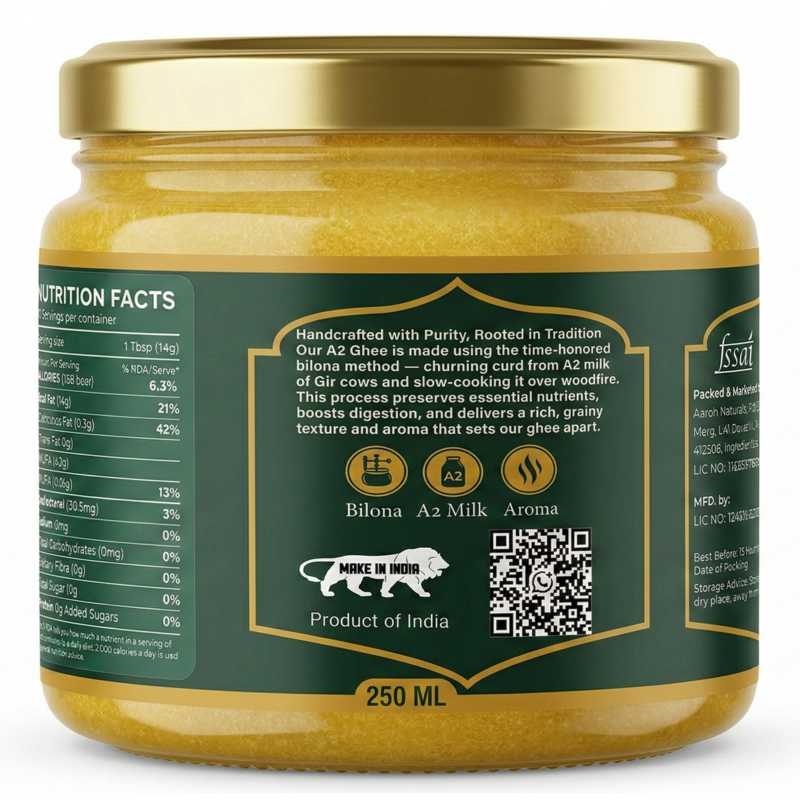
Many families choose a small jar of A2 Gir Cow Ghee for elders' meals, kept separately with its own clean spoon.