Anyone who has made ghee at home knows the moment. The golden ghee has been strained into its jar, and at the bottom of the kadai and in the muslin sits a sticky, fragrant, brown residue. Some people throw it away. In many Indian homes, children hover around the stove waiting for it. It is called kharchan, or simply ghee residue, and it is too good to waste.
What kharchan is
When butter is cooked into ghee, the milk solids, mainly proteins and a little milk sugar, separate from the fat, sink and brown. Those browned solids are kharchan. They are still coated in ghee, and they carry an intense, toasty, caramel-like flavour from the Maillard reaction, the same browning chemistry that flavours roasted nuts and toast. We explained that in why ghee smells so good when warmed.
If the ghee was made from cultured butter, the residue also has a slightly tangy note.
How long it keeps
Not long. Unlike ghee, kharchan contains milk solids and some moisture, which is exactly what makes ghee perishable. Refrigerate it in a clean, covered container and use it within 2 to 3 days. Discard it if it smells sour or looks mouldy.
Simple ways to use it
1. With sugar or jaggery. The simplest and most loved. Mix warm kharchan with a spoon of powdered sugar or grated jaggery and eat it as it is. In many homes this is a treat for children right after ghee is made.
2. In roti or paratha dough. Knead a few spoons of kharchan into atta dough. It makes rotis and parathas soft, rich and faintly sweet. This is one of the most common uses.
3. Sweet rotis. Mix kharchan with jaggery and a pinch of cardamom, stuff it into roti dough, roll gently and cook on a tawa with a little ghee.
4. In halwa and sheera. Stir a spoon or two into sooji halwa or atta sheera near the end of cooking for extra depth.
5. Quick burfi. Some families cook kharchan with a little milk powder or khoya, sugar and cardamom until it comes together, and set it into small squares. Simple and very rich.
6. In cookies. Mix a little into nankhatai or atta cookie dough for a caramel note.
7. On toast. Spread warm kharchan on toast with a sprinkle of sugar. Not traditional. Very good.
8. In dal or sabzi. A small spoon stirred into a plain dal or a dry sabzi adds a rich, roasted flavour. It works best with mild dishes.
When not to use it
- If the ghee burned, the residue will be bitter and acrid. Throw it away.
- If the residue has been sitting at room temperature for more than a few hours.
- If it smells sour, cheesy or off.
Why bought ghee has no residue
Packaged ghee is strained thoroughly before bottling, since leftover solids shorten shelf life. So kharchan is a pleasure reserved for people who make ghee at home. If you want to try, our step-by-step guide on how to make ghee at home from malai ends with a bowl of it.
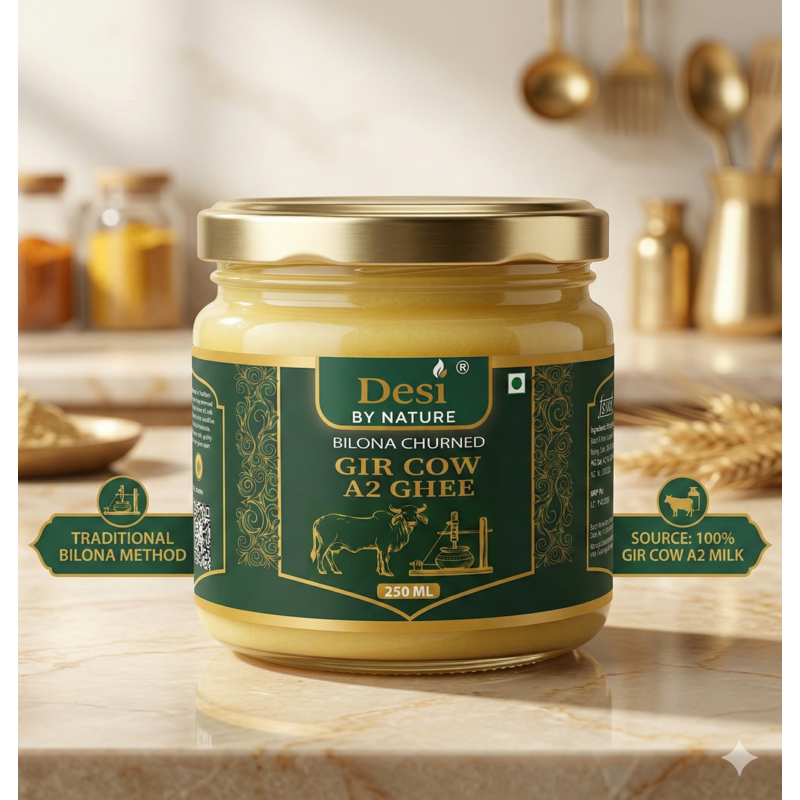
And for everything the malai box cannot cover, there is Desi Cow A2 Ghee, strained clean and ready to use.