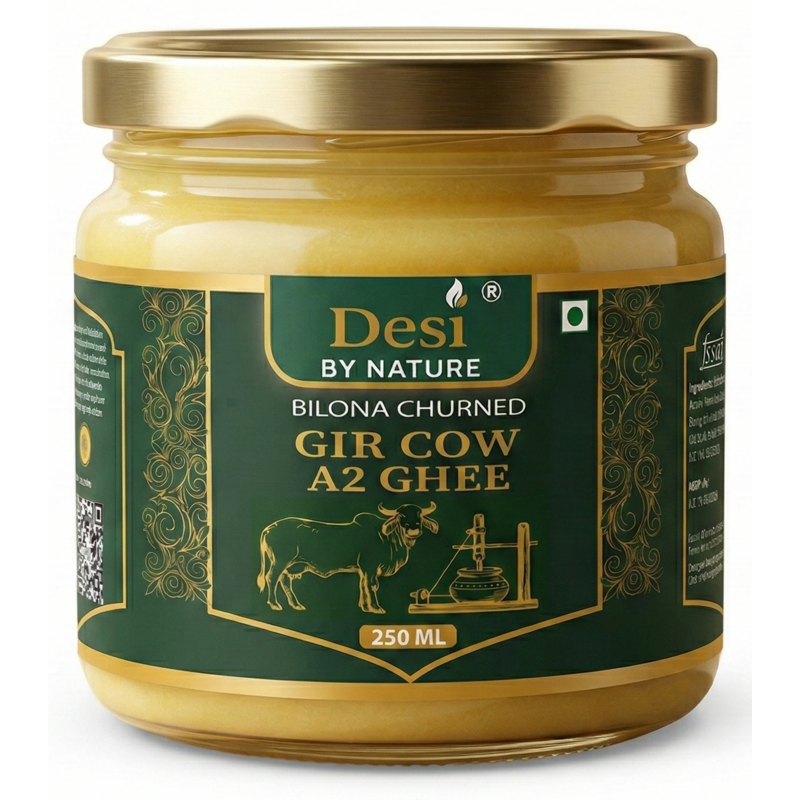
There is a scene that plays out in Indian homes every July and every January: a suitcase being packed for a hostel, a new job or a first flat in another city, and a parent quietly adding a jar of ghee between the clothes. It is a small act of care, and a practical one. A spoon of ghee makes mess food, instant dal and hurried rotis taste like home. The challenge is getting it there without a greasy disaster.
Choosing the container
Food-grade steel with a screw lid or a tight clamp: the best choice for luggage. Unbreakable, light enough, and easy to clean.
Glass jar: keeps ghee well and does not transfer flavours, but can break. If you pack glass, wrap it well and keep it in the middle of a suitcase.
Food-grade plastic with a screw lid: light and unbreakable, suitable for shorter periods.
Avoid: containers with snap-on lids, which pop open under pressure or heat, and anything that previously held strong-smelling pickles.
Packing so it does not leak
- Pack it set, not liquid. If it is warm weather, chill the ghee in the fridge for a few hours before packing so it is solid.
- Do not fill to the brim. Leave some space, since ghee expands slightly as it warms.
- Seal the lid. Place a piece of cling film or butter paper under the lid before closing it.
- Double bag it. Put the container in a zip-lock bag, then another.
- Pack it upright and central, surrounded by clothes, away from electronics and documents.
- Check airline rules. Ghee is a food, and many airlines restrict liquids and semi-solids in cabin baggage above small volumes. Check-in luggage is usually the safer place. Rules change, so check with your airline before flying.
Or have it delivered
Often simpler: have ghee delivered directly to the hostel or flat once the student has settled. It saves luggage space and avoids leaks. Check that the hostel accepts parcels and that the student will be around to receive it.
How much to send
For a student or single working person who cooks occasionally, a 250 or 500 ml jar usually lasts one to three months. That is a good size: it gets used while fresh, and a smaller jar is easier to store in a shared room.
Ghee without a kitchen: hostel ideas
- On mess food. A spoon over dal and rice or on rotis instantly improves them.
- Ghee and sugar or jaggery roti. Leftover mess roti, a little ghee, a sprinkle of sugar, rolled up.
- Instant upma, poha or oats. A teaspoon of ghee stirred in makes packaged mixes taste far better.
- Ghee on toast with salt and pepper or sugar.
- In an electric kettle meal. Instant noodles or ready-to-eat dal with a spoon of ghee.
- Ghee roasted makhana. Made at home and sent along in an airtight box. See makhana.
For a first flat with a small kitchen
- One-pot moong dal khichdi with ghee.
- Jeera rice. See jeera rice in ghee.
- Egg bhurji in ghee. See egg bhurji.
- Dal with a quick ghee tadka.
Storing ghee in a hostel room
- Keep it away from windows and heaters.
- Always use a clean, dry spoon. In shared rooms, a dedicated spoon kept with the jar helps.
- Close the lid tightly; hostel cupboards collect smells.
- If it smells sharp or sour, throw it out. See how to tell if ghee has gone bad.
For students, a 250 ml jar of A2 Gir Cow Ghee or a 500 ml jar of Desi Cow A2 Ghee is a sensible size. Ghee ships free, so sending it straight to a hostel costs nothing extra on delivery.