Every region of India tempers food, and almost every one does it differently. The idea is always the same: whole or ground spices bloomed in hot fat, then poured over or stirred into a dish. The combinations, and the order they go into the pan, tell you where in India you are. Many regions use mustard, coconut or sesame oil for their tadkas. Every one of these works beautifully in ghee as well, and several are traditionally made that way.
For all of them: heat ghee until it shimmers, add seeds first, then aromatics, then ground spices off the heat. We covered the basic technique in dal tadka with ghee.
1. Punjabi dhaba tadka
In ghee: cumin, dried red chilli, garlic, onion, Kashmiri chilli powder off the heat.
Use on: dal fry, dal makhani, rajma, chole.
2. Gujarati vaghar
In ghee: mustard seeds, cumin, methi seeds, hing, curry leaves, dried red chilli, sometimes a clove and cinnamon.
Use on: Gujarati dal with its sweet and sour balance, kadhi, and khichdi.
3. Rajasthani lehsun tadka
In ghee: cumin, plenty of garlic, dried red chillies, red chilli powder, hing.
Use on: panchmel dal, ker sangri, and anything eaten with bajra roti.
4. Maharashtrian phodni
In ghee: mustard seeds, cumin, hing, turmeric, curry leaves, green chilli.
Use on: varan (plain dal), which in Maharashtra is traditionally eaten with rice and a spoon of ghee on top, the classic varan bhaat tup.
5. South Indian thalippu or oggarane
In ghee: mustard seeds, urad dal, chana dal, dried red chilli, curry leaves, hing.
Use on: upma, pongal, lemon rice, curd rice, rasam and chutneys.
6. Tamil pepper and cumin tempering
In ghee: whole black pepper, cumin, ginger, curry leaves, cashews.
Use on: ven pongal and milagu rasam. See ven pongal.
7. Kerala shallot tempering
In ghee or coconut oil: mustard seeds, thinly sliced shallots, curry leaves, dried red chilli.
Use on: parippu (Kerala dal) and moru curry.
8. Bengali ghee and garam masala finish
In ghee: bay leaf, cumin, dried red chilli, a pinch of sugar, finished with a little Bengali garam masala of cardamom, cinnamon and clove.
Use on: cholar dal and some festive vegetable dishes. Much Bengali cooking uses mustard oil, but these dishes often call for ghee.
9. Kashmiri tadka
In ghee: cloves, black cardamom, hing, dry ginger powder and fennel powder, Kashmiri red chilli.
Use on: rajma and dum aloo in the Kashmiri Pandit style, which uses no onion or garlic.
10. Awadhi or Lucknowi baghar
In ghee: cumin, cloves, sliced garlic browned slowly, and a pinch of red chilli.
Use on: arhar dal and dal gosht. The garlic should be deep golden, not burnt.
11. Andhra chilli-garlic tempering
In ghee: mustard seeds, cumin, crushed garlic, plenty of dried red chillies, curry leaves.
Use on: pappu (Andhra dal) and tomato dal, eaten with rice and ghee.
12. Vrat tadka
In ghee: cumin, green chilli, ginger, sendha namak. No hing, onion or garlic, following many families' fasting customs.
Use on: sabudana khichdi, sama rice, aloo sabzi. See cooking for Navratri fasts.
General tips
- Mustard seeds first, and wait until they pop, or they taste bitter.
- Hing for a few seconds only.
- Curry leaves splutter. Stand back, and dry them well.
- Ground spices off the heat.
- Pour immediately. A tadka that sits loses its aroma.
Why ghee makes tadkas better
Many of the aroma compounds in spices dissolve in fat, and ghee carries them wonderfully while adding its own nutty flavour. A small amount of a fragrant ghee gives a tadka that fills the room.
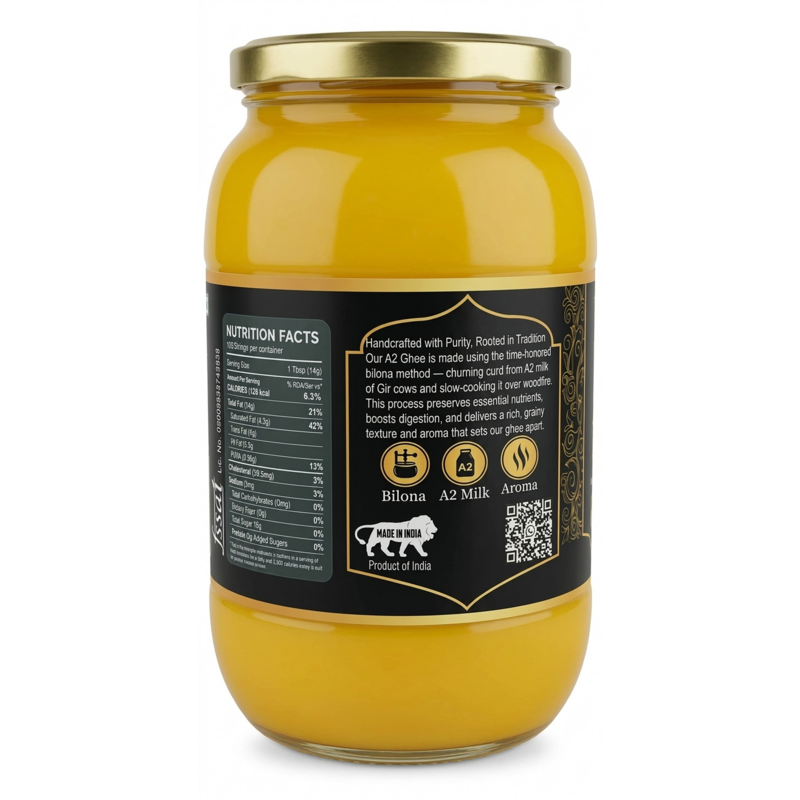
For daily tadkas, our Desi Cow A2 Ghee by the stove is what we recommend.