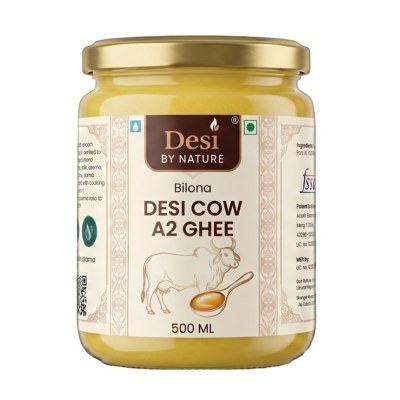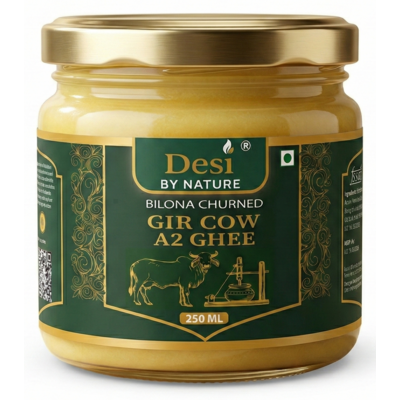
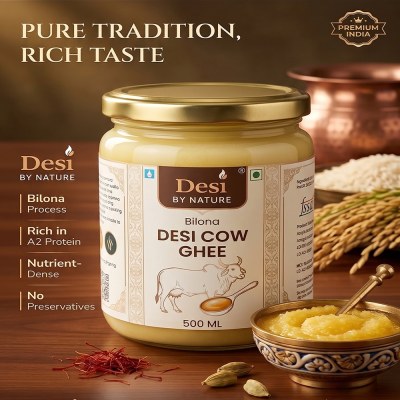
Carefully sourced, independently lab-tested. One ingredient, nothing added.
Lab-verified batch · dispatched fresh in glass
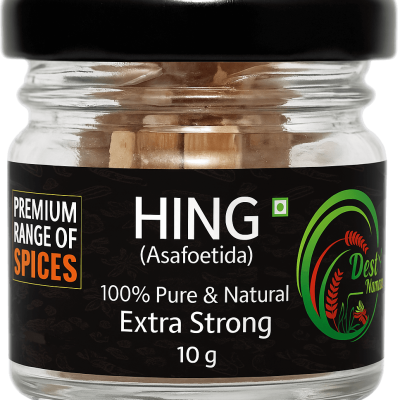
Ghee, hing and haldi are what a tadka is made of. Add them together in one tap.
We work only with dairies that still do it this way, and have the ghee lab-tested, every batch before it carries our name.
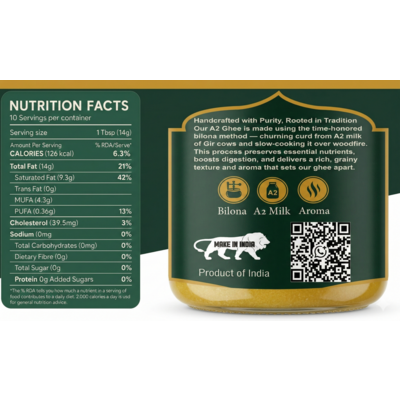
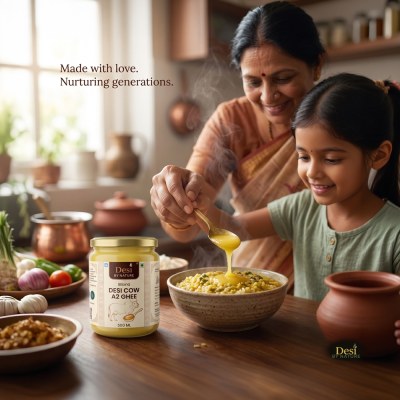
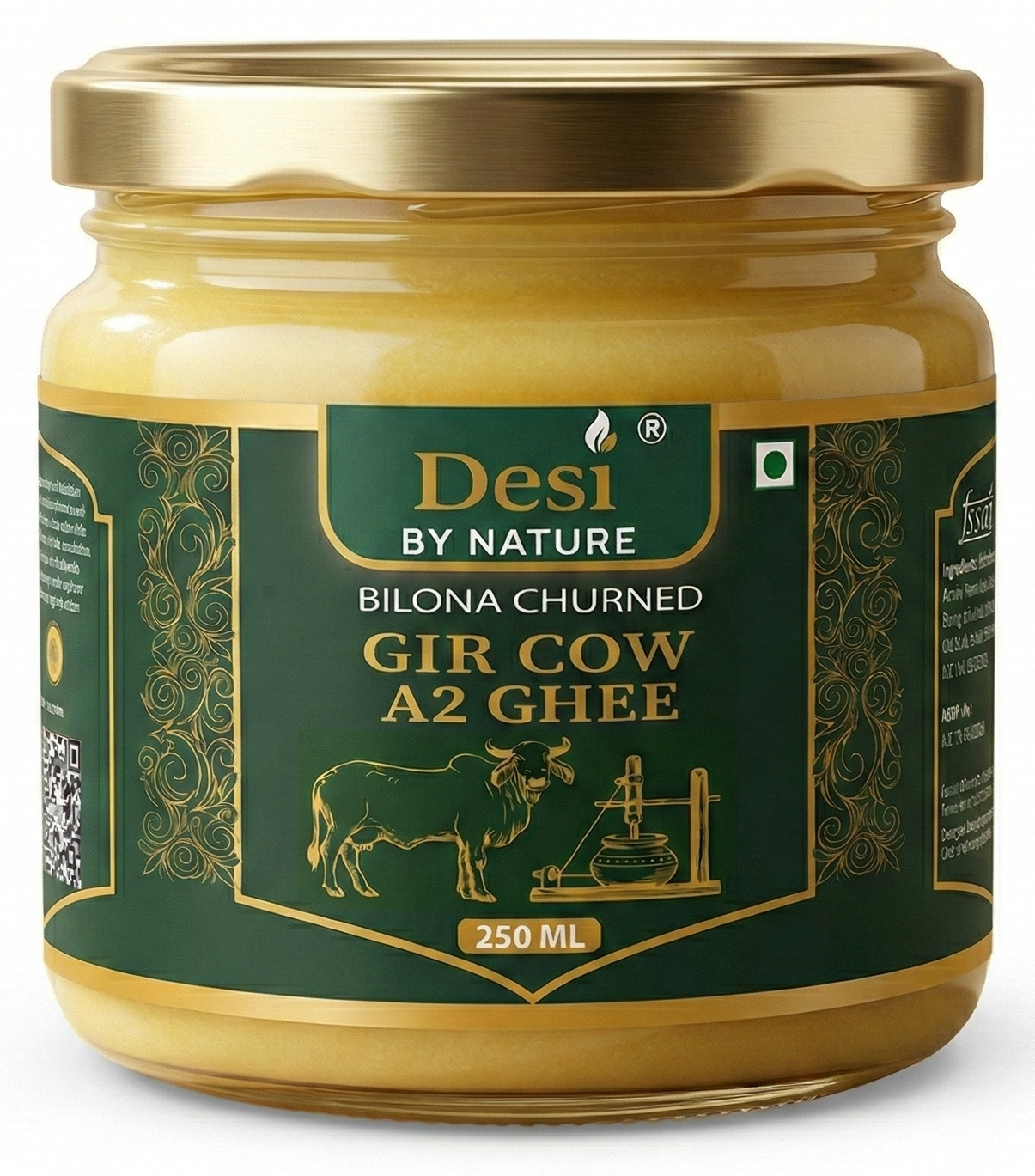
This is bilona-method ghee, curd-churned, not made from cream, produced for us by Gir cow dairies we have personally vetted. Grainy, golden, and aromatic, the way good ghee should be.
What is insideOne ingredient: A2 Gir cow ghee. Nothing added, diluted, or fortified. The A2 protein comes from indigenous Gir cow milk, the kind traditional ghee was always made from.
The people behind this jarWe work only with dairies that still churn it the traditional bilona way, taste every batch ourselves, and send it to an independent NABL-accredited laboratory. Only batches that pass on the numbers and the aroma get bottled and shipped. Meet our farmers.
How to use itEveryday cooking and tempering, a spoon over hot rice or dal, baking, or in baby food. A little goes a long way.
StorageKeep at room temperature. Ghee may turn liquid in summer and solid or grainy in winter, both are normal and a sign of no additives. Use a dry spoon.
Real A2 Gir cow bilona ghee needs far more milk per jar than ordinary ghee, and we bottle it in glass and lab-test every batch. The price reflects the milk, the verification, and the packaging, not a marketing markup. Compared with other genuine A2 Gir cow bilona ghee, we sit at roughly half the price.
| Our A2 Gir Cow Ghee | Typical supermarket ghee | |
|---|---|---|
| Milk | Gir cows only, from dairies we have vetted | Often pooled from many farms, cow or mixed milk |
| Method | Curd churned into makkhan (bilona), then slow-heated | Usually cream separated by machine, then heated |
| Testing | Every batch at a NABL-accredited lab; report available | Varies by brand; batch reports are rarely shared |
| Ingredients | One: A2 Gir cow ghee | Usually one; worth checking the label |
| Packaging | Glass jar, or steel dolchi for 2.5 and 5 litres | Often a plastic tub, pouch or tin |
| Aroma | Deep, nutty and slightly tangy when warmed | Milder |
"Typical supermarket ghee" describes common practice across the category, not any particular brand. Some brands do things differently, so check the label and ask for a batch report whichever ghee you buy.
It is sourced from Gir cow dairies using indigenous Gir cow milk, and every batch is tested at a NABL-accredited laboratory for milk-fat purity, moisture, and adulteration. We publish the report on our proof page, and our FSSAI licence is public.
No. Ghee turns liquid in summer and solid or grainy in winter. This is normal and a sign of no additives. Why that happens, and the three signs a jar has actually turned.
Pay online through Razorpay (UPI, cards, net banking or wallets), or choose Cash on Delivery on orders from ₹699 to ₹4,999. With Cash on Delivery you pay 20% of the order (at least ₹299) plus a ₹49 handling fee online, and the rest to the courier at your door, in cash or by UPI. Paying online in full skips the handling fee and takes ₹10 off the goods. Most metro PIN codes get delivery in 3 to 4 working days, tier 2 and 3 cities in 3 to 7 days, and you can check yours above. Ghee always ships free, at every size, and so does anything ordered with it. Spices on their own ship free over ₹999.
Keep at room temperature with a dry spoon, refrigeration optional. Glass keeps the aroma true for up to a year. See the date on your jar. Full storage guide.
Three things. The milk comes only from Gir cows, from dairies we have vetted. The ghee is churned from curd by the bilona method, while most supermarket ghee is made from cream separated by machine. And every batch is tested by an independent NABL-accredited lab before we sell it. There is more in bilona vs cream-separated ghee.
It describes the milk. A1 and A2 are two forms of a milk protein called beta-casein, and indigenous Indian cows such as Gir give A2 milk. Ghee is almost pure fat, so it contains almost no protein itself: A2 on the jar tells you what milk the ghee was made from, not that the ghee is a source of A2 protein. Read what the research actually says about A2 vs A1, including where the evidence runs out.
Both are bilona ghee made from A2 milk, with nothing added. This one is made only from Gir cow milk, with every batch tested by a NABL-accredited lab. Our Desi Cow A2 Ghee is made from the milk of desi indigenous cows more broadly, is lab-tested too, and costs less, which suits everyday cooking.
A litre is about 65 tablespoons. A household using one tablespoon a day finishes it in about two months; three tablespoons a day, which is easy with a tadka, rotis and a sweet, in about three weeks. For the best aroma, finish a jar within two to three months of opening it. Our guide to how much ghee a household actually uses works out which size fits your kitchen.
Many Indian families add a few drops of ghee to a baby's food once solid food begins, at around six months. Every child is different, so check with your paediatrician first, especially if there is any history of milk allergy, since ghee can contain traces of milk protein.
No reviews yet. If you have bought this, we would love your honest review, with a photo if you can.