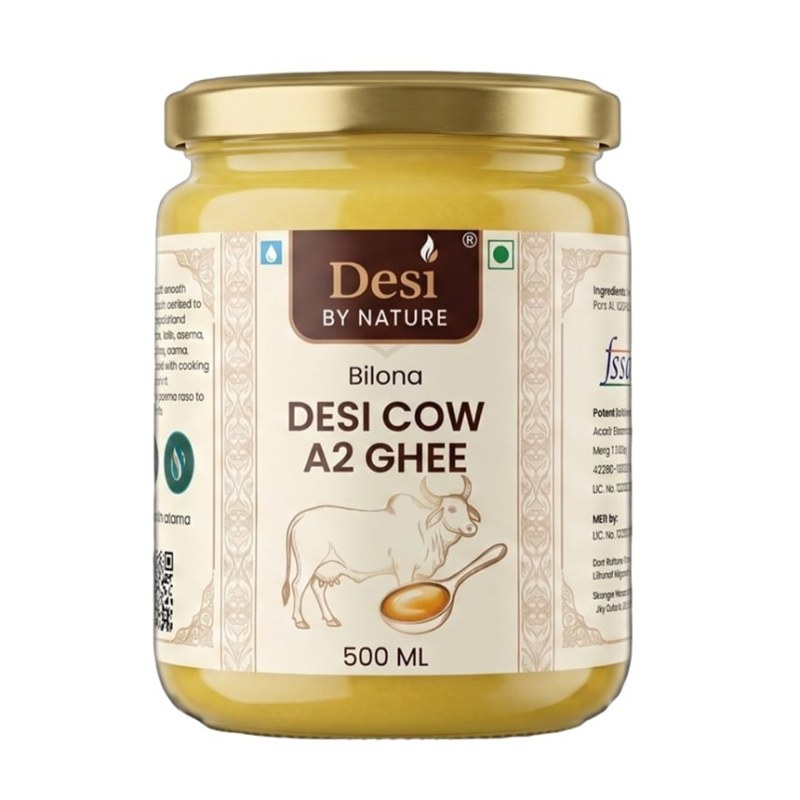
There was a time when a jar of ghee said "ghee" and a brand name. Now a single label might say organic, A2, desi, bilona, cultured, grass-fed, danedar and pure, all at once. Some of those words are regulated and certified. Some describe a genuine process that you have to take on trust. And some mean very little. Here is how to tell them apart.
Words backed by certification or regulation
Ghee. This one is legally defined. Under Indian food regulations, ghee must be pure milk fat meeting set standards for things like moisture, fatty acid profile and absence of other fats. A product that does not meet them cannot legally be sold as ghee.
Cow ghee. Should be made from cow milk only. If the label says "cow ghee", buffalo or mixed milk should not be in it.
Organic. In India, organic claims on food are regulated, and certified organic products are expected to carry a recognised mark: the Jaivik Bharat logo from FSSAI and, for products certified under the national programme, the India Organic mark. For ghee, organic certification relates to how the animals are kept and fed, including organic fodder and restrictions on certain treatments. It says nothing about whether the ghee is bilona or A2. A jar saying "organic" without any certification mark is making an unverified claim.
Agmark. A government grading mark for agricultural products, including ghee. It is voluntary, and indicates the product was graded against Agmark specifications.
Words describing a source or process
These are legitimate descriptions, but no separate certification mark exists for them, so they depend on the brand's honesty.
A2. Describes the type of beta-casein protein in the milk the ghee came from, usually milk from indigenous Indian breeds. Since ghee contains almost no protein, it is a statement about source, not content. See what A2 means.
Desi. In ghee labelling, usually means indigenous Indian cows as opposed to crossbred or exotic breeds. In everyday speech, "desi ghee" can simply mean traditional ghee as opposed to vanaspati, so the word is used loosely. On its own, it tells you little.
Gir, Sahiwal or another breed name. Claims the milk came from that specific breed. No lab test on ghee can confirm breed, so this depends entirely on the supply chain.
Bilona. Describes churning curd into butter rather than separating cream. We compared the methods in bilona vs cream-separated ghee.
Cultured. Means the milk or cream was fermented before churning. All bilona ghee is cultured. Some cream ghee is cultured too, by fermenting the cream.
Grass-fed. Suggests the animals graze or eat green fodder. In India, there is no standard definition of how much of the diet must be grass, so treat it as a general description.
Single-origin or single-dairy. Claims the milk comes from one source. Genuinely useful if true, because it makes the product traceable.
Words that mean very little
Pure, 100% pure. Every ghee says it. Pure ghee is simply ghee; there is no higher grade of purity to claim.
Premium. Marketing.
Traditional, natural, farm fresh. Pleasant, but undefined.
Danedar. Describes a grainy texture, which depends largely on cooling speed. It is not a quality grade. See why ghee turns grainy.
How the labels combine
These words are independent of each other. A ghee can be:
- A2 but not organic.
- Organic but made from crossbred cows, so not A2.
- Bilona but made from buffalo milk.
- Organic, A2 and cream-separated, not bilona.
So read each claim on its own merits, and ask which ones matter to you.
What to prioritise
If you care about the cows, look for A2 and a named breed or source dairy. If you care about farming practices, look for a genuine organic certification mark. If you care about flavour, look for bilona and taste it warm. If you care about purity, look for a single ingredient, an FSSAI number and a batch-linked lab report.
Where we stand
We do not currently label our ghee organic, because we only use that word when a product holds a current third-party certification. Our A2 Gir Cow Ghee is made from Gir cow milk, by the bilona method. Our Desi Cow A2 Ghee is made from the milk of desi indigenous cows, by the same method.