Every year, somewhere in the middle of Diwali preparations, someone in the kitchen discovers the ghee jar is nearly empty. Festive sweets and snacks use far more ghee than everyday cooking, and it is easy to underestimate. Here is a practical guide to plan with.
Ghee per batch, by sweet
These are typical amounts for a home batch, drawn from traditional recipes. Your family's version may use more or less.
- Besan ladoo (about 15 ladoos, 2 cups besan): ¾ cup ghee, about 180 ml. See besan ladoo.
- Mysore pak (about 16 pieces, 1 cup besan): 1½ to 2 cups ghee, 350 to 475 ml. See Mysore pak.
- Moong dal halwa (6 servings, 1 cup dal): ¾ cup ghee, about 180 ml. See moong dal halwa.
- Sooji halwa (6 to 8 servings, ½ cup sooji): ½ cup ghee, about 120 ml.
- Atta ladoo or pinni (15 to 18 pieces, 2 cups atta): about 1 cup ghee, 240 ml.
- Gajar halwa (6 servings, 1 kg carrots): 4 to 6 tbsp ghee, 60 to 90 ml.
- Coconut ladoo (about 14): 1 to 2 tbsp ghee, 15 to 30 ml.
- Kaju katli (about 25 pieces): 1 to 2 tsp, plus a little for greasing.
- Motichoor ladoo (about 16): frying ghee of 400 to 500 ml, of which a portion is absorbed and the rest strained and reused.
- Nankhatai (about 20): ½ cup ghee, 120 ml.
- Shakarpara or mathri (a large jar): ¼ cup ghee in the dough, about 60 ml, plus frying ghee.
- Gulab jamun (about 20): frying ghee as above, plus a little in the dough.
Frying ghee: plan for absorption, not the whole kadai
For fried sweets and snacks, you need enough ghee to fill a small kadai, typically 400 to 600 ml, but only a portion is absorbed by the food. The rest can be strained and reused, first for other frying and then for cooking. As a rough guide, allow 150 to 250 ml of ghee genuinely used up per batch of fried sweets or namkeen, depending on the recipe. Our guide to deep frying in ghee has more.
A worked example: a family Diwali batch
Say a family plans to make:
- Besan ladoo: 180 ml
- Mysore pak: 400 ml
- Nankhatai: 120 ml
- Shakarpara (dough 60 ml, frying used 200 ml): 260 ml
- Coconut ladoo: 30 ml
That comes to about 990 ml, close to a litre, for sweets alone. Add the frying ghee you need on hand at the start (about 500 ml, much of which comes back after straining), plus a week of festive meals and diyas, and a total of 2 to 3 litres over the Diwali week is realistic for a family that cooks at home.
Other Diwali uses to count
- Diyas: 1 to 2 tsp per small diya. Twenty diyas a night over several nights adds up. See ghee diyas.
- Lakshmi puja prasad and kheer or halwa for the puja.
- Festive meals with puris, pulao and rich curries.
- Guests.
How to buy the right amount
- Up to 1 litre: for families making one or two sweets and buying the rest.
- A 2.5 litre dolchi: for a family making several sweets and cooking festive meals at home.
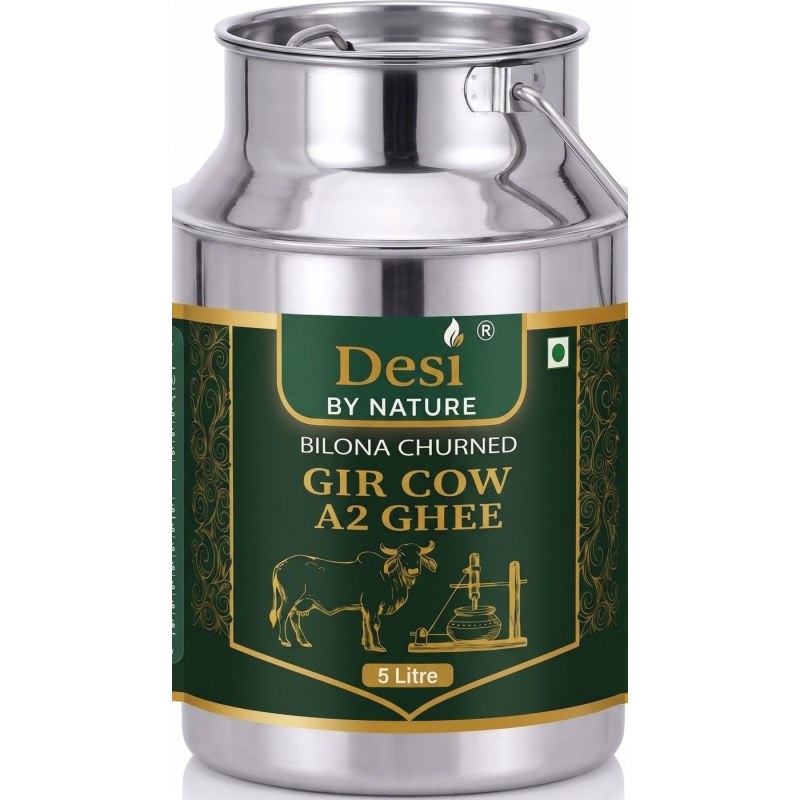
- A 5 litre dolchi: for large or joint families, those making sweets to gift, or anyone who wants one large stock to last well past the festival. If price per ml matters most, several 1 litre jars work out cheaper.
Order a week or more before Diwali. Courier networks are busy across the country in the days before the festival.
Use different ghees for different jobs
Many families use a more economical ghee for frying and for sweets where spices and sugar dominate, and keep their finest ghee for sweets where ghee is the flavour, such as Mysore pak and besan ladoo, and for the puja.
A practical Diwali setup: a 5 litre dolchi of Desi Cow A2 Ghee for frying and cooking, and a 1 litre jar of A2 Gir Cow Ghee for the ghee-forward sweets and the diyas.