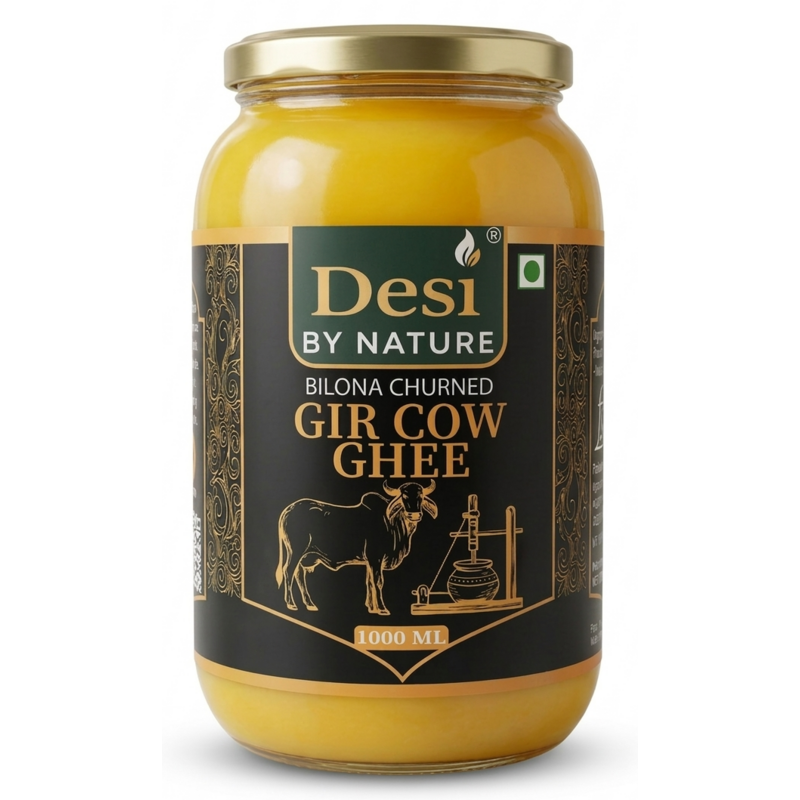
Over the last seven weeks we have written in depth about ghee: how it is made, how to buy it, how to cook with it and what it can and cannot do. Some questions just need a quick answer. Here are the ones we hear most, each with a link if you want the detail.
Is ghee dairy?
Yes. Ghee is made from milk fat, so it is a dairy product, even though almost all the lactose and milk protein are removed. See ghee and lactose.
Is ghee the same as clarified butter?
Nearly. Ghee is clarified butter cooked a little longer, so the milk solids brown and give it a nutty flavour. See ghee vs butter.
Does ghee need to be refrigerated?
Usually not. Stored sealed, in a cool, dark cupboard and used with a dry spoon, it keeps for months. See does ghee need refrigeration.
Why is my ghee liquid?
Because it is warm. Ghee melts in hot weather and sets when it is cool. That is normal.
Why is my ghee grainy?
Slow cooling forms larger fat crystals. It is normal and not a sign of spoilage or proof of purity. See why ghee turns grainy.
Why is my new jar a different colour?
Colour changes with the cows' feed and the season. See why ghee looks different from jar to jar.
How do I know if ghee has gone bad?
Smell it. Rancid ghee smells sharp, sour or paint-like. Mould means throw it away. See can ghee go bad.
How many calories are in a spoon of ghee?
About 45 kcal per teaspoon and 126 kcal per tablespoon. See calories in ghee.
Can you fry in ghee?
Yes. Ghee tolerates frying temperatures well and can be strained and reused a few times. See deep frying in ghee.
What is the smoke point of ghee?
Commonly cited figures are around 230 to 250°C, much higher than butter. See smoke point of ghee.
What does A2 mean on ghee?
It means the ghee was made from milk with A2 beta-casein, usually from indigenous cows. The ghee itself contains almost no protein. See what A2 means.
What is bilona ghee?
Ghee made by setting whole milk into curd, churning the curd into butter and cooking the butter. See how bilona ghee is made.
Why is bilona ghee so expensive?
It needs roughly 25 to 30 litres of milk per litre, and the process is slow. See why bilona ghee costs more.
What is the difference between cow ghee and buffalo ghee?
Cow ghee is yellow and more aromatic. Buffalo ghee is white, firmer and usually cheaper. See cow vs buffalo ghee.
What is Gir cow ghee?
Ghee from the milk of Gir cows, an indigenous breed from Gujarat. See what is Gir cow ghee.
Is ghee the same as vanaspati or Dalda?
No. Vanaspati is hydrogenated vegetable fat and contains no milk fat. See ghee vs vanaspati.
How can I tell if ghee is pure?
Home tests catch obvious problems but cannot prove purity. Check the label and ask for a batch lab report. See home purity tests and reading a lab report.
Is ghee good for lactose intolerance?
Most people with lactose intolerance tolerate ghee well. People with a milk allergy should ask their doctor first.
Does ghee raise cholesterol?
Ghee is mostly saturated fat, which raises LDL in many people in large amounts. Moderate amounts in a balanced diet are generally considered reasonable. See ghee and cholesterol.
Can babies have ghee?
Many Indian families add a few drops to first foods after about six months. Check with your paediatrician. See ghee in baby food.
Can I make ghee at home?
Yes, from collected malai. See how to make ghee at home.
What size jar should I buy?
One you will finish within two or three months of opening. See choosing a ghee size.
Is there a difference between your two ghees?
Yes. One is from Gir cows only, the other from desi indigenous cows. See A2 Gir Cow Ghee vs Desi Cow A2 Ghee.
If your question is not here, message us on WhatsApp. You can also browse A2 Gir Cow Ghee and Desi Cow A2 Ghee.