Over the last several weeks we have published a long series of articles about ghee. This page brings them together into a single guide, so you can start wherever your question is. If you read only a few, the first section covers the basics.
Start here: the basics
- How bilona ghee is made, step by step
- Bilona vs cream-separated ghee
- What A2 means, without the jargon
- A2 vs A1 milk, and what it means for ghee
- What is Gir cow ghee?
- Ghee vs butter
- The ghee glossary
Understanding what you are buying
- How to choose good ghee: a buyer's checklist
- How to read a ghee label
- Organic, A2, desi: what the labels mean
- Cow ghee vs buffalo ghee
- Ghee vs vanaspati
- India's indigenous cow breeds
- Questions to ask before buying ghee online
Price and value
- Why bilona ghee costs more
- How much milk goes into a litre
- How to compare ghee prices fairly
- Choosing the right size
- Is a dolchi worth it?
- Homemade vs bought bilona ghee
Purity and verification
- Red flags before you buy
- Home purity tests and their limits
- How to read a ghee lab report
- FSSAI standards for ghee
- The Baudouin test
- How to taste-test ghee side by side
Colour, texture, storage and shelf life
- Why ghee turns grainy
- Why your ghee looks different from your last jar
- Why ghee smells so good when warmed
- How to store bilona ghee
- Does ghee need refrigeration?
- How to tell if ghee has gone bad
- Glass, plastic or tin?
Cooking with ghee
- The smoke point of ghee
- Twelve tadkas from across India
- Deep frying in ghee without waste
- Baking with ghee
- Ghee vs refined oil
- Ghee, coconut oil or mustard oil?
- A week of meals with a litre of ghee
- How to make ghee at home
- Uses for ghee residue
Everyday recipes
- Ghee rice, jeera rice and vegetable pulao
- Dal tadka, rajma chawal and kadhi pakora
- Soft phulkas, aloo paratha, methi thepla and bajra roti
- Ghee roast dosa, ven pongal and rava upma
- Moong dal khichdi and dal baati churma
- Paneer butter masala, egg bhurji and roasted vegetables
- Roasted makhana, popcorn and ghee coffee
Festivals and sweets
- Cooking for Navratri fasts, kuttu puri, singhare ka halwa, sabudana khichdi and Ashtami sooji halwa
- A Dussehra lunch menu and Karwa Chauth sargi
- Besan ladoo, motichoor ladoo, coconut ladoo and pinni
- Mysore pak, kaju katli and balushahi
- Moong dal halwa, gajar halwa and rice kheer
- Shakarpara
- How much ghee you need for Diwali, ghee diyas, Dhanteras to Diwali and storing festival sweets
- Ghee as a Diwali gift
Family, health and tradition
- Calories in ghee, and reasonable portions
- Ghee and cholesterol
- Ghee and lactose
- Seven ghee myths
- Ghee in Ayurveda
- Ghee in baby food and in your child's tiffin
- Traditional postpartum foods
- Ghee in meals for elderly parents
- Ghee for dry winter skin
- Sending ghee with students and travellers
Culture and history
- A short history of ghee in India
- How India eats ghee, region by region
- Chaas, the buttermilk left behind
About us
- Why we sell so few things
- A2 Gir Cow Ghee vs Desi Cow A2 Ghee
- What happens between your order and your door
- What customers ask before their first order
- Ghee questions, answered briefly
One last piece of advice
Whatever ghee you buy, warm half a spoon in a pan and smell it before you cook with it. Almost everything in this guide is, in the end, an explanation of that smell.
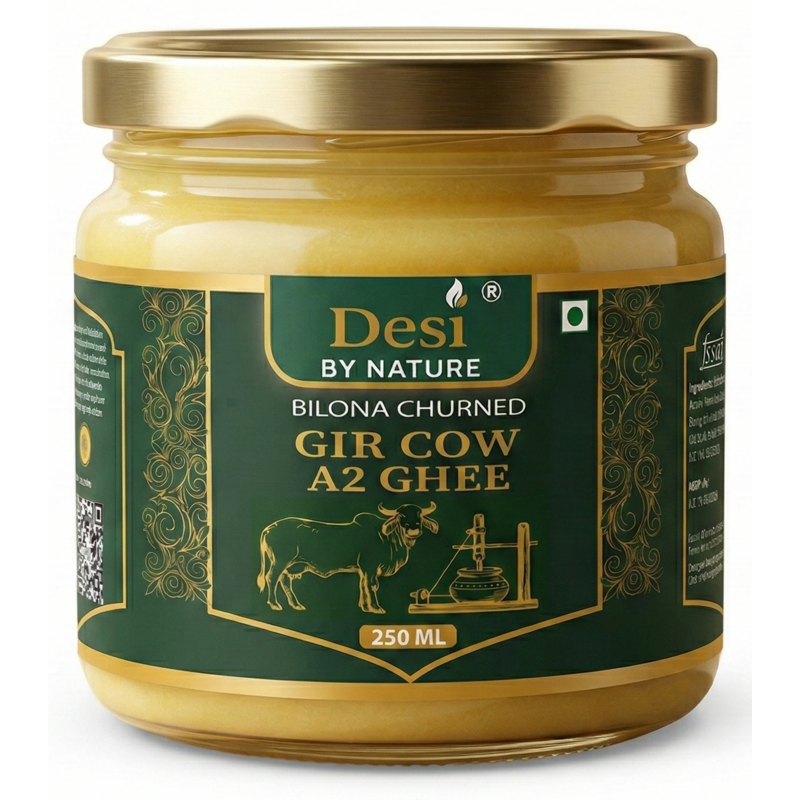
Our two ghees: A2 Gir Cow Ghee, from Gir cows with batch lab reports, and Desi Cow A2 Ghee, from desi indigenous cows. Both bilona, both lab-tested, both with nothing added, both shipped free across India.